Understanding Zerocoin Protocol Anonymity: The Future of Private Cryptocurrency Transactions
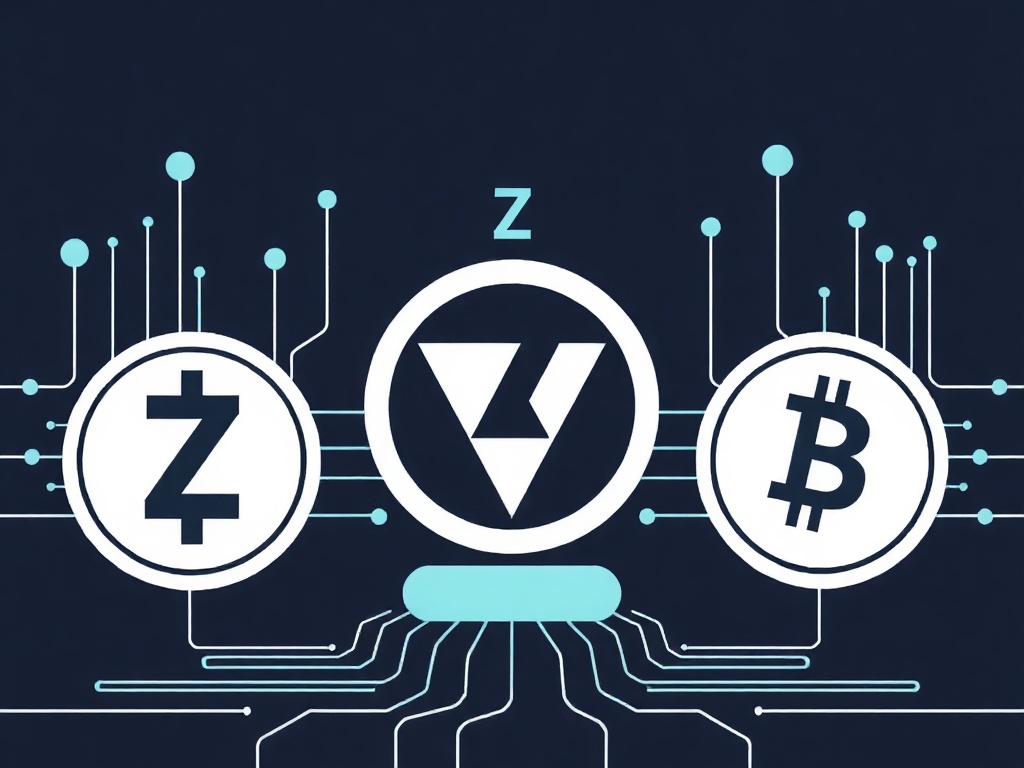
In the ever-evolving landscape of digital finance, Zerocoin protocol anonymity has emerged as a groundbreaking solution for individuals seeking financial privacy. As governments and corporations increasingly monitor financial transactions, the demand for truly anonymous cryptocurrency protocols has never been more pressing. The Zerocoin protocol, first introduced in 2013, represents a significant leap forward in cryptographic privacy, offering users the ability to transact without revealing their financial history or identity.
This comprehensive guide explores the intricacies of the Zerocoin protocol, its technical foundations, real-world applications, and the challenges it faces in the modern cryptocurrency ecosystem. Whether you're a seasoned crypto enthusiast or a newcomer to the world of digital privacy, this article will provide valuable insights into how Zerocoin protocol anonymity is reshaping the future of secure transactions.
The Evolution of Cryptocurrency Anonymity: From Bitcoin to Zerocoin
The Limitations of Bitcoin's Pseudonymity
Bitcoin, the pioneering cryptocurrency, introduced the concept of decentralized digital money but fell short in providing true anonymity. While Bitcoin transactions are recorded on a public ledger (the blockchain), they are not directly linked to real-world identities. However, sophisticated blockchain analysis techniques can often deanonymize users by tracing transaction patterns, linking addresses to IP addresses, or correlating with other publicly available data.
This pseudonymous nature of Bitcoin created a significant privacy gap, prompting developers to seek more robust solutions. Early attempts to enhance privacy included mixing services like CoinJoin, which combined multiple transactions to obscure their origins. However, these solutions had inherent vulnerabilities, such as reliance on trusted third parties and susceptibility to timing attacks.
The Birth of the Zerocoin Protocol
The Zerocoin protocol was conceptualized by Ian Miers, Christina Garman, Matthew Green, and Aviel D. Rubin at Johns Hopkins University. Their 2013 paper, "Zerocoin: Anonymous Distributed E-Cash from Bitcoin," presented a novel approach to achieving cryptographic anonymity without compromising the decentralized nature of blockchain technology.
The primary innovation of the Zerocoin protocol was its ability to break the link between a user's spending and their previous transactions, effectively making it impossible to trace the origin of funds. Unlike Bitcoin, where transaction history is permanently etched into the blockchain, Zerocoin introduced the concept of "zero-knowledge proofs" to validate transactions without revealing any underlying information.
How Zerocoin Protocol Anonymity Differs from Other Privacy Solutions
Several privacy-focused cryptocurrencies have emerged in recent years, each employing different techniques to obscure transaction details. Here’s how Zerocoin protocol anonymity stands out:
- CoinJoin: Combines multiple transactions to obscure their origins but requires trust in the mixing service and is vulnerable to analysis.
- Confidential Transactions: Hides transaction amounts using cryptographic commitments but does not obscure sender-receiver relationships.
- Ring Signatures (Monero): Mixes a user's transaction with others' to obscure the sender but does not provide full anonymity for the entire transaction chain.
- Zerocash (Zcash): An evolution of Zerocoin that uses zk-SNARKs for enhanced privacy but requires a trusted setup and has faced criticism over its parameters.
The Zerocoin protocol’s unique approach lies in its ability to completely sever the link between a user’s spending and their past transactions, making it one of the most robust solutions for financial privacy.
Technical Deep Dive: How the Zerocoin Protocol Achieves Anonymity
The Cryptographic Foundations of Zerocoin
The Zerocoin protocol leverages several advanced cryptographic techniques to ensure Zerocoin protocol anonymity. At its core, the protocol relies on:
- Zero-Knowledge Proofs (ZKPs): Mathematical proofs that allow one party to prove knowledge of a secret without revealing the secret itself. In Zerocoin, this is used to validate that a coin was properly minted without disclosing its origin.
- Pedersen Commitments: Cryptographic commitments that hide the value of a coin while allowing it to be spent without revealing its denomination.
- RSA Accumulators: A data structure that efficiently proves membership in a set without revealing the set’s contents. This is crucial for validating that a coin has been properly minted without exposing its serial number.
- Digital Signatures: Used to authenticate transactions and ensure that only the rightful owner can spend a coin.
The Zerocoin Minting Process: Creating Anonymous Coins
The process of minting a Zerocoin begins with a user burning a specific amount of a base cryptocurrency (e.g., Bitcoin) to create a Zerocoin. Here’s a step-by-step breakdown:
- Burning Base Currency: The user sends a transaction to a Zerocoin smart contract, burning a certain amount of the base currency (e.g., 1 BTC).
- Generating a Serial Number: The user generates a unique serial number for the Zerocoin, which will be used to spend it later.
- Creating a Zero-Knowledge Proof: The user generates a ZKP that proves the serial number was correctly generated from the burned base currency without revealing the serial number itself.
- Minting the Zerocoin: The ZKP is submitted to the blockchain, and the Zerocoin is minted. At this point, the original base currency is destroyed, and the Zerocoin enters circulation.
Crucially, the serial number is not revealed during minting, ensuring that the origin of the Zerocoin remains hidden. This process effectively severs the link between the user’s spending and their past transactions, a cornerstone of Zerocoin protocol anonymity.
The Zerocoin Spending Process: Transacting Privately
To spend a Zerocoin, the user must prove that they are the rightful owner without revealing the coin’s serial number or its origin. Here’s how it works:
- Selecting a Zerocoin: The user selects a Zerocoin from their wallet that they wish to spend.
- Generating a Zero-Knowledge Proof: The user generates a ZKP that proves the coin was properly minted and that they know the serial number associated with it, without revealing the serial number itself.
- Submitting the Proof: The ZKP is submitted to the blockchain, and the transaction is validated. The serial number is added to a list of spent serial numbers to prevent double-spending.
- Receiving Base Currency: The user receives the equivalent amount of the base currency (e.g., Bitcoin) in their wallet, completing the transaction.
Because the serial number is never revealed during the spending process, it is impossible to trace the origin of the Zerocoin. This ensures that Zerocoin protocol anonymity is maintained throughout the transaction lifecycle.
Security Considerations and Potential Vulnerabilities
While the Zerocoin protocol offers robust privacy guarantees, it is not without its challenges. Some of the key security considerations include:
- Denial-of-Service (DoS) Attacks: An attacker could flood the network with invalid minting or spending transactions, potentially disrupting the protocol.
- Double-Spending Risks: If a user attempts to spend the same Zerocoin twice before the serial number is recorded on the blockchain, they could potentially succeed in a double-spend attack.
- Quantum Computing Threats: The RSA accumulators used in Zerocoin are vulnerable to attacks from quantum computers, which could break the cryptographic assumptions underlying the protocol.
- Trusted Setup Requirements: Early versions of Zerocoin required a trusted setup to generate the RSA parameters, which could be compromised by malicious actors.
Despite these challenges, the Zerocoin protocol has undergone rigorous cryptographic analysis, and many of its vulnerabilities have been addressed in subsequent iterations and related protocols like Zerocash.
Zerocoin Protocol Anonymity in Practice: Real-World Implementations
Zerocoin as a Bitcoin Extension
The Zerocoin protocol was initially designed as an extension to Bitcoin, allowing users to mint and spend Zerocoins pegged to Bitcoin’s value. This implementation, known as Zerocoin Bitcoin (Zerocoin-BTC), enabled users to transact privately while still leveraging Bitcoin’s robust infrastructure.
However, integrating Zerocoin with Bitcoin presented several challenges:
- Transaction Fees: Minting and spending Zerocoins incurred additional transaction fees, making it less practical for small transactions.
- Blockchain Bloat: Each Zerocoin minting and spending transaction added data to the Bitcoin blockchain, increasing its size and potentially reducing scalability.
- Adoption Barriers: The complexity of the Zerocoin protocol made it difficult for average users to adopt, limiting its mainstream appeal.
Despite these challenges, Zerocoin-BTC demonstrated the feasibility of Zerocoin protocol anonymity in a real-world cryptocurrency environment.
Zerocash and the Evolution of Privacy Coins
The Zerocash protocol, introduced in 2014, built upon the foundations of Zerocoin to create a more efficient and privacy-preserving cryptocurrency. Zerocash introduced several key improvements:
- zk-SNARKs: Zero-Knowledge Succinct Non-Interactive Arguments of Knowledge (zk-SNARKs) replaced the RSA accumulators used in Zerocoin, enabling more efficient proofs and smaller transaction sizes.
- Selective Disclosure: Users could optionally reveal transaction details for auditing or regulatory compliance while maintaining privacy by default.
- Improved Scalability: The use of zk-SNARKs reduced the computational overhead and blockchain bloat associated with Zerocoin.
Zerocash was later implemented as the privacy layer for Zcash, one of the most popular privacy-focused cryptocurrencies today. While Zcash is not a direct implementation of the Zerocoin protocol, it owes much of its design to the principles of Zerocoin protocol anonymity.
Other Cryptocurrencies Leveraging Zerocoin Principles
Several other cryptocurrencies have adopted or adapted the Zerocoin protocol to enhance their privacy features. These include:
- PIVX: A privacy-focused cryptocurrency that uses a modified version of the Zerocoin protocol to enable anonymous transactions.
- Zcoin (now Firo): One of the first cryptocurrencies to implement the Zerocoin protocol, allowing users to mint and spend anonymous coins pegged to Bitcoin.
- SmartCash: A community-driven cryptocurrency that incorporates Zerocoin-like features to enhance privacy.
These implementations highlight the versatility of the Zerocoin protocol and its potential to serve as a foundation for privacy-preserving cryptocurrencies.
Use Cases for Zerocoin Protocol Anonymity
The Zerocoin protocol anonymity has a wide range of applications beyond simple private transactions. Some of the most compelling use cases include:
- Financial Privacy: Individuals in oppressive regimes or with high net worth can protect their financial activities from surveillance or theft.
- Corporate Confidentiality: Businesses can conduct sensitive transactions without revealing proprietary information or trade secrets.
- Charitable Donations: Donors can contribute to causes anonymously, ensuring their generosity does not expose them to unwanted attention or solicitations.
- Gambling and Betting: Privacy-preserving transactions enable secure and anonymous gambling platforms without the risk of financial exposure.
- Medical and Legal Transactions: Sensitive transactions related to healthcare or legal services can be conducted privately, protecting individuals' rights and confidentiality.
As the demand for financial privacy grows, the applications of Zerocoin protocol anonymity are likely to expand, making it a critical tool for individuals and organizations alike.
Challenges and Criticisms of the Zerocoin Protocol
Regulatory and Compliance Hurdles
One of the most significant challenges facing Zerocoin protocol anonymity is regulatory scrutiny. Governments and financial authorities worldwide are increasingly focused on combating money laundering, terrorism financing, and other illicit activities. Privacy-enhancing technologies like Zerocoin often face pushback due to concerns that they could be used to facilitate illegal transactions.
Key regulatory challenges include:
- Anti-Money Laundering (AML) Laws: Many jurisdictions require financial institutions to implement AML measures, which can conflict with the anonymity provided by Zerocoin.
- Know Your Customer (KYC) Requirements: Exchanges and service providers may be required to collect and verify user identities, undermining the privacy benefits of Zerocoin.
- Travel Rule Compliance: The Financial Action Task Force (FATF) has extended its Travel Rule to cryptocurrency transactions, requiring the sharing of sender and receiver information for transactions above a certain threshold.
To address these challenges, some privacy-focused projects have explored selective disclosure mechanisms, allowing users to reveal transaction details when necessary while maintaining privacy by default.
Technical and Operational Limitations
While the Zerocoin protocol offers robust privacy guarantees, it is not without technical and operational limitations. Some of the most notable include:
- Computational Overhead: Generating and verifying zero-knowledge proofs requires significant computational resources, which can slow down transaction processing and increase costs.
- Blockchain Bloat: Each Zerocoin minting and spending transaction adds data to the blockchain, increasing its size and potentially reducing scalability.
- Wallet Complexity: Managing Zerocoins requires a deep understanding of the protocol, making it less accessible to average users. Wallets must securely store serial numbers and zero-knowledge proofs, adding complexity to the user experience.
- Interoperability Issues: Integrating Zerocoin with existing blockchain networks can be challenging, particularly when dealing with different consensus mechanisms or smart contract platforms.
These limitations have led some developers to explore alternative privacy solutions, such as Mimblewimble or Confidential Transactions, which offer different trade-offs between privacy, scalability, and usability.
Security Risks and Attack Vectors
Like any cryptographic protocol, the Zerocoin protocol is susceptible to various security risks and attack vectors. Some of the most critical include:
- Parameter Subversion: The trusted setup required to generate RSA parameters for Zerocoin could be compromised, allowing an attacker to create counterfeit coins or undermine the protocol’s integrity.
- Side-Channel Attacks: Attackers could exploit timing or power consumption patterns to infer information about serial numbers or zero-knowledge proofs.
- Denial-of-Service (DoS) Attacks: An attacker could flood the network with invalid transactions, disrupting the minting or spending process and potentially preventing legitimate users from transacting.
- Quantum Computing Threats: The RSA accumulators used in Zerocoin are vulnerable to attacks from quantum computers, which could break the cryptographic assumptions underlying the protocol.
To mitigate these risks, developers have proposed improvements such as post-quantum cryptographic alternatives and more robust parameter generation processes. However, the threat landscape continues to evolve, requiring ongoing vigilance and innovation.
Public Perception and Adoption Barriers
The perception of privacy-enhancing technologies like Zerocoin is often polarized. While some users and organizations champion the protocol for its ability to protect financial privacy, others view it with suspicion due to its potential use in illicit activities. This dichotomy has created significant adoption barriers, particularly in mainstream financial systems.
Key challenges in public perception include:
- Association with Illicit Activities: Privacy coins are often linked to darknet markets, ransomware, and other illegal activities, which can deter legitimate users and businesses.
- Lack of Education: Many users are unaware of the technical nuances of Zerocoin protocol anonymity and may overestimate or underestimate its privacy guarantees.
- Competition with Other Privacy Solutions: The cryptocurrency space is crowded with privacy-focused projects, each offering different trade-offs. Zerocoin must compete with alternatives like Mon
 Emily ParkerCrypto Investment Advisor
The Zerocoin Protocol Anonymity: Balancing Privacy and Practicality in Digital Asset Investments
As a certified financial analyst with over a decade of experience guiding investors through the complexities of digital assets, I’ve seen firsthand how privacy-enhancing technologies like the Zerocoin protocol can reshape the cryptocurrency landscape. The Zerocoin protocol, introduced as a solution to Bitcoin’s lack of inherent privacy, offers a compelling mechanism for achieving anonymity by breaking the link between transaction inputs and outputs. Unlike traditional mixers or tumblers, Zerocoin leverages zero-knowledge proofs to ensure that coins can be spent without revealing their origin, which is particularly valuable for institutional investors or high-net-worth individuals seeking to protect sensitive financial data. However, its adoption has been hindered by scalability challenges and the emergence of more user-friendly alternatives like zk-SNARKs-based privacy coins. For investors, understanding the trade-offs between anonymity, usability, and regulatory compliance is critical when evaluating assets that integrate Zerocoin or similar protocols.
From a practical investment perspective, the Zerocoin protocol’s anonymity features present both opportunities and risks. On one hand, privacy-focused cryptocurrencies that implement Zerocoin—such as Zcash (in its early iterations)—have attracted significant attention from investors who prioritize confidentiality in their transactions. This can be a strategic advantage in regions with stringent capital controls or for entities operating in competitive industries where transaction transparency could expose sensitive business strategies. On the other hand, the protocol’s reliance on cryptographic assumptions and potential vulnerabilities in its implementation (e.g., the 2019 Zcash counterfeiting bug) underscore the importance of due diligence. Investors should assess the long-term viability of Zerocoin-based assets by evaluating the development team’s track record, network adoption, and regulatory outlook. Ultimately, while Zerocoin protocol anonymity remains a powerful tool for privacy-conscious stakeholders, its role in a diversified portfolio should be carefully weighed against evolving alternatives and market dynamics.