The Ultimate Guide to Private NFT Marketplaces: Secure, Anonymous, and Exclusive Digital Asset Trading
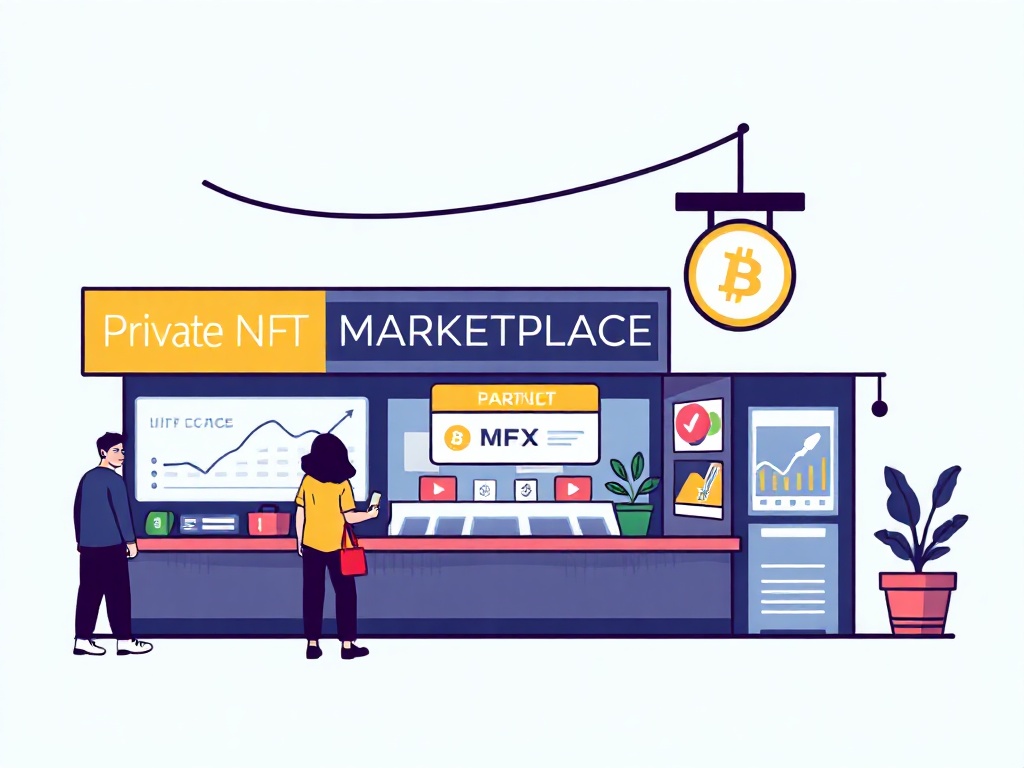
In the rapidly evolving world of blockchain technology, private NFT marketplaces have emerged as a game-changer for collectors, creators, and investors seeking enhanced privacy, security, and exclusivity. Unlike traditional public NFT platforms, these specialized marketplaces prioritize anonymity, discretion, and controlled access, making them ideal for high-value transactions and sensitive digital assets.
This comprehensive guide explores the concept of a private NFT marketplace, its key features, benefits, and how it differs from conventional platforms. Whether you're a seasoned NFT enthusiast or a newcomer to the space, understanding the nuances of private NFT trading can help you make informed decisions while safeguarding your digital assets.
What Is a Private NFT Marketplace?
A private NFT marketplace is a specialized platform designed for the secure and confidential trading of non-fungible tokens (NFTs). Unlike public marketplaces like OpenSea or Rarible, which operate on transparent blockchain networks, private NFT platforms often incorporate additional layers of privacy, such as permissioned access, encrypted transactions, or off-chain storage solutions.
These marketplaces cater to individuals and entities that prioritize discretion, such as high-net-worth collectors, institutional investors, or creators dealing with sensitive intellectual property. By limiting participation to vetted users, a private NFT marketplace reduces exposure to market manipulation, front-running, and other risks associated with public platforms.
Key Characteristics of Private NFT Marketplaces
- Permissioned Access: Users must undergo verification processes, such as KYC (Know Your Customer) or invitation-only registration, to participate.
- Enhanced Privacy: Transactions and ownership details are often obscured or stored off-chain to prevent public scrutiny.
- Exclusive Listings: High-value or rare NFTs are frequently traded on private platforms to maintain confidentiality.
- Lower Competition: Reduced visibility in public markets can lead to better pricing for buyers and sellers.
- Customizable Smart Contracts: Private marketplaces may offer tailored solutions for specific use cases, such as fractionalized ownership or time-locked sales.
Private vs. Public NFT Marketplaces: A Comparative Overview
While public NFT marketplaces like OpenSea or Magic Eden dominate the mainstream, private platforms serve a distinct niche. Below is a comparison to highlight their differences:
| Feature | Public NFT Marketplace | Private NFT Marketplace |
|---|---|---|
| Accessibility | Open to all users with an internet connection | Restricted to verified or invited participants |
| Privacy | All transactions are publicly visible on the blockchain | Transactions may be obscured or stored off-chain |
| Transaction Fees | Typically lower fees due to high competition | Higher fees due to specialized services and exclusivity |
| Liquidity | High liquidity with millions of users | Lower liquidity but higher-quality listings |
| Use Cases | General trading, gaming, art, and collectibles | High-value assets, institutional trading, confidential deals |
For individuals or organizations that require discretion, a private NFT marketplace offers a compelling alternative to the transparency of public platforms.
Why Choose a Private NFT Marketplace Over a Public One?
While public NFT marketplaces provide unparalleled accessibility and liquidity, they may not be suitable for everyone. A private NFT marketplace addresses several pain points associated with public platforms, making it an attractive option for specific use cases. Below are the key reasons to consider a private platform:
1. Enhanced Privacy and Anonymity
Public blockchains like Ethereum or Solana are inherently transparent, meaning every transaction is recorded on-chain and visible to anyone. While this transparency is a core feature of blockchain technology, it can be a drawback for users who wish to keep their NFT holdings or trading activities confidential.
A private NFT marketplace mitigates this issue by:
- Using zero-knowledge proofs (ZKPs) or stealth addresses to obscure transaction details.
- Storing metadata off-chain in encrypted databases to prevent public exposure.
- Implementing permissioned access to ensure only trusted parties can view or trade NFTs.
For collectors dealing with high-value assets or creators protecting intellectual property, this level of privacy is invaluable.
2. Reduced Risk of Market Manipulation
Public NFT marketplaces are susceptible to wash trading, spoofing, and front-running, where malicious actors artificially inflate prices or exploit timing advantages. These practices can distort market perceptions and lead to financial losses for unsuspecting traders.
A private NFT marketplace minimizes these risks by:
- Limiting participation to vetted users, reducing the likelihood of manipulation.
- Implementing time-locked auctions or blind bidding to prevent front-running.
- Offering over-the-counter (OTC) trading for large transactions, bypassing public order books.
This controlled environment fosters fairer pricing and more stable markets for high-value NFTs.
3. Exclusive Access to High-Value Listings
Private marketplaces often feature invite-only or curated collections, ensuring that only premium NFTs are traded on their platforms. This exclusivity attracts serious collectors and institutional investors who seek rare or historically significant digital assets.
Benefits of exclusive listings include:
- Higher Quality Assets: Curated collections reduce the risk of scams or low-effort projects.
- Networking Opportunities: Access to a community of like-minded individuals, including artists, investors, and industry leaders.
- Premium Services: Dedicated account managers, personalized support, and tailored transaction solutions.
For example, platforms like Nifty Gateway (which operates a semi-private model) have successfully attracted high-profile artists and collectors by offering exclusive drops and limited-edition releases.
4. Institutional-Grade Security and Compliance
Institutional investors and corporations often require robust security measures and regulatory compliance when trading digital assets. A private NFT marketplace can provide:
- KYC/AML Verification: Ensuring compliance with anti-money laundering (AML) and know-your-customer (KYC) regulations.
- Cold Storage Solutions: Secure offline storage for high-value NFTs to prevent hacking or theft.
- Insurance Options: Partnerships with insurers to protect against loss or damage to digital assets.
- Smart Contract Audits: Rigorous third-party audits to ensure the integrity of trading protocols.
These features make private marketplaces an ideal choice for hedge funds, family offices, and corporate treasuries looking to diversify into NFTs without compromising security or compliance.
5. Customizable Trading Experiences
Public marketplaces often follow a one-size-fits-all model, which may not cater to the unique needs of all users. In contrast, a private NFT marketplace can offer:
- Fractionalized Ownership: Allowing multiple investors to co-own a high-value NFT through tokenized shares.
- Time-Locked Sales: Enabling sellers to set specific release dates or vesting periods for NFTs.
- Custom Royalties: Tailored royalty structures for creators and collectors.
- White-Label Solutions: Branded marketplaces for enterprises or artists looking to launch their own platforms.
This flexibility ensures that users can tailor their trading experience to meet their specific goals and preferences.
How Does a Private NFT Marketplace Work? A Step-by-Step Breakdown
Understanding the mechanics of a private NFT marketplace is essential for users looking to navigate these platforms effectively. Below is a step-by-step breakdown of how private NFT trading typically works:
Step 1: Registration and Verification
Unlike public marketplaces, a private NFT marketplace requires users to undergo a verification process before gaining access. This may include:
- KYC Submission: Providing government-issued identification, proof of address, and sometimes financial statements.
- Invitation-Only Access: Receiving an exclusive invite from the platform or existing members.
- Reputation-Based Entry: Some platforms require users to hold a minimum number of NFTs or tokens to qualify for access.
Once verified, users receive credentials (e.g., a private key or API access) to log into the platform.
Step 2: Wallet Integration and Funding
After registration, users must connect a compatible cryptocurrency wallet to the platform. Private marketplaces often support:
- Hardware Wallets: Such as Ledger or Trezor, for maximum security.
- Multi-Signature Wallets: Requiring multiple approvals for transactions to prevent unauthorized access.
- Institutional Wallets: For corporate or high-net-worth users managing large portfolios.
Users then fund their wallets with the required cryptocurrency (e.g., ETH, SOL, or stablecoins) to facilitate transactions.
Step 3: Browsing and Discovering Listings
Private NFT marketplaces often feature curated collections or invite-only drops, which may not be visible on public platforms. Users can:
- Explore Featured Collections: Highlighted NFTs from verified creators or artists.
- Search by Categories: Filtering by art, collectibles, virtual real estate, or other niches.
- View Private Auctions: Participating in sealed-bid or time-locked auctions for exclusive assets.
Some platforms also offer pre-sale access to new releases for early adopters or loyal members.
Step 4: Placing Bids or Making Offers
Depending on the marketplace, users can engage in various types of transactions:
- Fixed-Price Sales: Buying an NFT at a set price determined by the seller.
- English Auctions: Bidding openly against other participants with increasing prices.
- Dutch Auctions: Starting at a high price and gradually decreasing until a buyer accepts.
- Sealed-Bid Auctions: Submitting private bids that are only revealed after the auction ends (common in private marketplaces).
- OTC (Over-the-Counter) Trades: Negotiating directly with sellers for large or high-value transactions.
Private marketplaces may also support blind trading, where neither party knows the other’s identity until after the transaction is complete.
Step 5: Completing the Transaction
Once a buyer and seller agree on terms, the transaction is executed through a smart contract. Key steps include:
- Escrow Services: Funds are held in escrow until the NFT is transferred to the buyer’s wallet.
- Smart Contract Execution: The NFT is transferred from the seller’s wallet to the buyer’s, and payment is released to the seller.
- Metadata Handling: If metadata is stored off-chain, it is updated to reflect the new ownership.
- Confirmation and Receipt: Both parties receive confirmation of the completed transaction, often with a private transaction ID for record-keeping.
Some platforms also provide post-trade services, such as insurance, storage solutions, or legal documentation.
Step 6: Post-Transaction Support
A reputable private NFT marketplace will offer ongoing support, including:
- Dispute Resolution: Mediating conflicts between buyers and sellers.
- Portfolio Management: Tools for tracking and managing NFT holdings.
- Tax and Compliance Assistance: Guidance on reporting NFT transactions for tax purposes.
- Community Events: Exclusive webinars, AMAs, or networking opportunities for members.
This level of support ensures a smooth and secure trading experience for all participants.
Top Private NFT Marketplaces to Watch in 2024
The private NFT marketplace ecosystem is growing rapidly, with new platforms emerging to cater to niche audiences. Below are some of the most prominent private NFT marketplaces in 2024, each offering unique features and benefits:
1. Nifty Gateway
Nifty Gateway is one of the most well-known semi-private NFT marketplaces, operated by the Winklevoss twins’ Gemini exchange. While it allows public access, it also features invite-only drops and curated collections that appeal to high-profile artists and collectors.
Key Features:
- Partnerships with major artists like Beeple, Grimes, and Steve Aoki.
- Fiat on-ramps for easy purchasing with credit/debit cards.
- Custodial storage options for added security.
- Exclusive "Nifty Gateway Editions" with limited supply.
Best For: High-profile artists, institutional collectors, and those seeking a blend of public and private trading.
2. SuperRare
SuperRare is a curated NFT marketplace that operates on a permissioned model, requiring artists to apply and be approved before listing their work. While buyers can browse listings publicly, the platform emphasizes exclusivity and quality.
Key Features:
- Strict curation process to ensure high-quality digital art.
- Native token ($RARE) for governance and staking.
- Royalties for artists on secondary sales.
- Integration with Ethereum and Polygon for low-cost transactions.
Best For: Digital artists, serious collectors, and those prioritizing quality over quantity.
3. Foundation
Foundation is an invite-only NFT marketplace that focuses on creative collaboration and exclusive drops. Artists must receive an invitation from existing members to list their work, fostering a tight-knit community of creators and collectors.
Key Features:
- Invite-only artist and collector network.
- Emphasis on high-quality, experimental digital art.
- No public bidding; transactions are direct between parties.
- Strong community engagement with AMAs and live events.
Best For: Emerging and established artists, as well as collectors seeking unique, avant-garde NFTs.
4. MakersPlace
MakersPlace is a private NFT marketplace that partners with renowned artists, photographers, and

The Rise of Private NFT Marketplaces: A Strategic Shift in Digital Asset Ownership
As a Senior Crypto Market Analyst with over a decade of experience in digital asset markets, I’ve observed that the evolution of NFTs is now pivoting toward exclusivity and controlled access—a trend embodied by the emergence of private NFT marketplaces. These platforms represent a sophisticated evolution beyond public marketplaces, catering to high-net-worth individuals, institutions, and creators who prioritize privacy, curation, and asset integrity. Unlike open platforms where transactions are transparent and often speculative, private NFT marketplaces offer vetted participation, reduced exposure to market manipulation, and enhanced compliance frameworks. This shift is not merely a niche development; it reflects a broader institutionalization of digital assets, where confidentiality and risk management are paramount.
From a practical standpoint, private NFT marketplaces introduce several compelling advantages. First, they enable creators and collectors to transact with greater discretion, which is particularly valuable for high-value assets or sensitive intellectual property. Second, these platforms often integrate advanced identity verification and KYC/AML protocols, aligning with regulatory expectations and reducing exposure to illicit activity. Third, by limiting access to a curated community, they foster deeper engagement and higher-value transactions, as participants are typically more committed and informed. However, the success of such marketplaces hinges on robust governance, transparent pricing mechanisms, and liquidity management—challenges that require careful design and execution. For institutions and serious collectors, private NFT marketplaces are not just an alternative; they are a strategic imperative in an increasingly regulated and competitive digital asset landscape.