The Ultimate Guide to Encrypted P2P Messengers: Secure Communication in the Digital Age
In an era where digital privacy is increasingly under threat, encrypted P2P messengers have emerged as a vital tool for secure communication. Unlike traditional messaging platforms that rely on centralized servers, these innovative applications leverage peer-to-peer (P2P) technology to ensure that your conversations remain private, untraceable, and resistant to surveillance. Whether you're a privacy advocate, a business professional, or simply someone who values confidentiality, understanding the benefits and mechanics of encrypted P2P messengers is essential.
This comprehensive guide explores the core principles behind encrypted P2P messengers, compares top platforms, and provides actionable insights on how to choose the best solution for your needs. By the end, you'll have a clear understanding of why these tools are revolutionizing secure communication and how they can protect you from prying eyes.
The Rise of Encrypted P2P Messengers: Why Privacy Matters More Than Ever
The digital landscape has evolved dramatically over the past decade, with messaging apps becoming a primary means of communication for billions of people worldwide. However, the convenience of these platforms often comes at the cost of privacy. Major messaging services like WhatsApp, Telegram, and Signal, while offering end-to-end encryption, still rely on centralized servers that can be vulnerable to hacking, government surveillance, or data breaches. This is where encrypted P2P messengers step in, offering a decentralized alternative that prioritizes user anonymity and security.
The Limitations of Centralized Messaging Platforms
Centralized messaging platforms operate by storing user data on remote servers, which are controlled by corporations or governments. While encryption protocols like Signal's Signal Protocol or WhatsApp's E2E encryption provide a layer of security, the servers themselves remain a potential weak point. For instance:
- Data Retention Risks: Even if messages are encrypted, metadata (such as who you're talking to, when, and for how long) can still be logged and analyzed.
- Server Vulnerabilities: Centralized servers are prime targets for cyberattacks. A single breach can expose millions of users' data.
- Censorship and Surveillance: Governments and ISPs can block or monitor traffic to these servers, limiting access or tracking communications.
In contrast, encrypted P2P messengers eliminate these risks by removing the need for centralized servers altogether. Instead, messages are sent directly between users, ensuring that no third party—including the app developers—can access your conversations.
The Advantages of Peer-to-Peer Communication
P2P technology has been a cornerstone of secure communication for decades, but its application in messaging apps is a relatively recent development. Here’s why encrypted P2P messengers are superior in many ways:
- No Single Point of Failure: Since there are no central servers, there’s no single entity that can be hacked or forced to hand over data.
- Enhanced Anonymity: P2P networks often use techniques like onion routing or IP masking to obscure users' identities and locations.
- Lower Latency: Direct peer-to-peer connections can reduce delays in message delivery, especially for users in the same geographic region.
- Resistance to Censorship: Without a central server to target, governments and ISPs struggle to block these networks entirely.
As awareness of digital privacy grows, so does the demand for tools like encrypted P2P messengers. These platforms are not just for activists or criminals—they’re for anyone who values their right to private communication in an increasingly surveilled world.
How Encrypted P2P Messengers Work: A Deep Dive into the Technology
Understanding the inner workings of encrypted P2P messengers requires a basic grasp of cryptography, networking, and decentralized systems. At their core, these apps combine several advanced technologies to create a secure, private communication channel. Below, we break down the key components that make these messengers so effective.
End-to-End Encryption (E2EE): The Foundation of Security
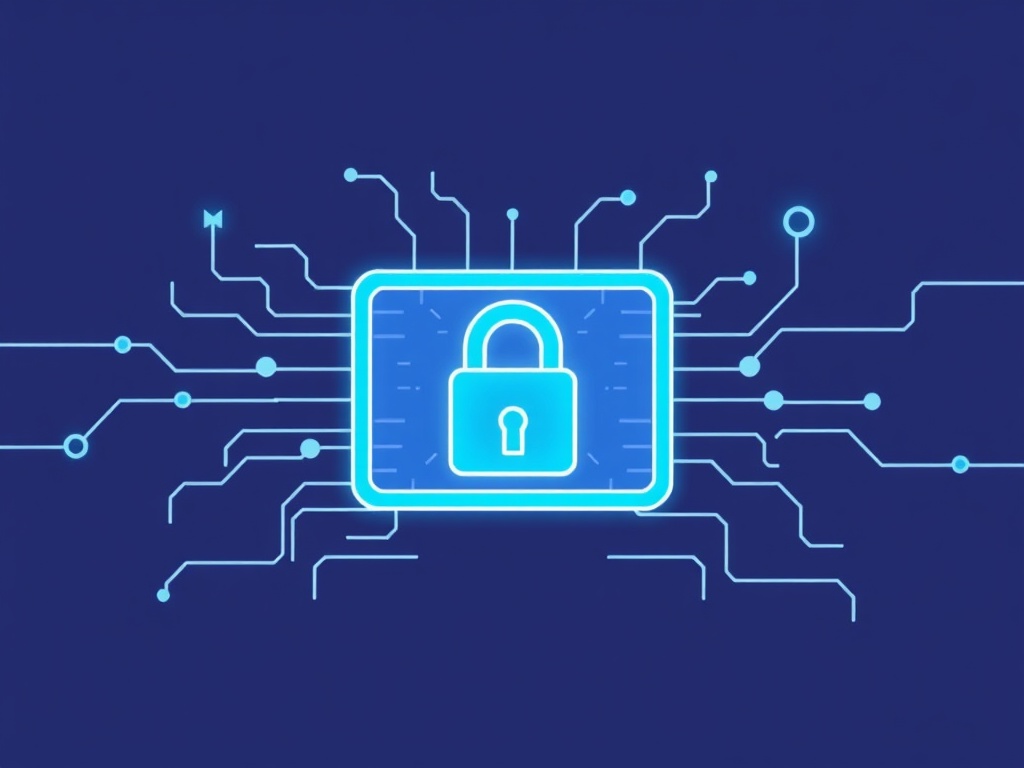
End-to-end encryption is a non-negotiable feature for any secure messaging app, and encrypted P2P messengers take it a step further by ensuring that encryption keys are never shared with a central authority. Here’s how it works:
- Key Generation: When you install a P2P messenger, the app generates a unique cryptographic key pair for you—a public key and a private key. The public key is shared with other users, while the private key remains securely stored on your device.
- Message Encryption: When you send a message, your device uses the recipient’s public key to encrypt the message. This ensures that only the recipient’s private key can decrypt it.
- Direct Transmission: The encrypted message is sent directly to the recipient’s device via the P2P network, bypassing any intermediaries.
- Decryption: The recipient’s device uses their private key to decrypt the message, which is then displayed in plaintext.
This process ensures that even if an attacker intercepts the message during transmission, they cannot read its contents without the recipient’s private key. Some encrypted P2P messengers also implement perfect forward secrecy, which generates a new key for each session, further enhancing security.
Peer-to-Peer Networking: The Backbone of Decentralization
Unlike traditional messaging apps that rely on a central server to route messages, encrypted P2P messengers use a decentralized network where each user acts as both a sender and a receiver. This is achieved through two primary P2P models:
1. Pure P2P Networks
In a pure P2P network, every device in the network can communicate directly with every other device. This model is used by some of the most secure encrypted P2P messengers, such as Session and Briar. Key characteristics include:
- No Central Servers: Messages are routed directly between peers, eliminating the need for a central authority.
- Dynamic Routing: If a direct connection isn’t possible (e.g., due to NAT or firewalls), the network uses relay nodes to facilitate communication without storing messages.
- Resilience: The network remains operational even if some nodes go offline, as messages can be rerouted through alternative paths.
2. Hybrid P2P Networks
Some encrypted P2P messengers use a hybrid model, combining P2P networking with a minimal amount of centralized infrastructure. For example:
- Discovery Servers: These servers help users find each other by storing temporary identifiers (e.g., usernames or public keys) but do not store messages or metadata.
- Relay Servers: In cases where direct P2P connections fail, relay servers temporarily store and forward messages without decrypting them.
Hybrid models strike a balance between decentralization and usability, making them more accessible to non-technical users while still maintaining a high level of security.
Additional Security Layers: Onion Routing and Stealth Addresses
To further obscure users' identities and locations, many encrypted P2P messengers incorporate advanced privacy techniques:
- Onion Routing: Inspired by the Tor network, onion routing encrypts messages in layers and routes them through multiple intermediate nodes, making it nearly impossible to trace the origin or destination of a message.
- Stealth Addresses: Instead of using your real phone number or email, these messengers generate unique, temporary addresses for each conversation, preventing third parties from linking your identity to your messages.
- Metadata Stripping: Some apps automatically remove metadata (e.g., timestamps, IP addresses) from messages to minimize the information available to potential attackers.
By combining these technologies, encrypted P2P messengers create a communication environment that is resistant to surveillance, censorship, and data breaches. However, not all P2P messengers are created equal—some prioritize ease of use, while others focus on maximum security. Let’s explore the top platforms in the next section.
Top Encrypted P2P Messengers in 2024: A Comparative Analysis
With the growing demand for secure communication, a variety of encrypted P2P messengers have entered the market, each with its own strengths and weaknesses. Below, we compare some of the most popular options, evaluating their security features, usability, and unique selling points.
1. Session: The Gold Standard for Anonymous Messaging
Session is widely regarded as one of the most secure encrypted P2P messengers available today. Developed by the Loki Foundation, Session is built on the Oxen blockchain and leverages a decentralized network of service nodes to route messages anonymously. Here’s what sets it apart:
Key Features
- No Phone Number Required: Unlike most messaging apps, Session does not require a phone number or email for registration. Instead, it generates a unique Session ID that you can share with others.
- Decentralized Routing: Messages are routed through a network of service nodes, which obfuscate the sender’s and recipient’s IP addresses.
- Open-Source and Audited: Session’s code is publicly available on GitHub, and its cryptographic protocols have been independently audited for vulnerabilities.
- Group Chats and File Sharing: Session supports encrypted group chats and file transfers, making it a versatile tool for both personal and professional use.
- No Metadata Logging: The app does not store any metadata, ensuring that your conversations remain truly private.
Pros and Cons
| Pros | Cons |
|---|---|
| Fully decentralized with no central authority | Slower message delivery due to onion routing |
| No phone number or email required for registration | Smaller user base compared to mainstream apps |
| Supports group chats and file sharing | Limited emoji and multimedia support |
| Regularly updated with new features | Requires users to back up their Session ID manually |
Best For: Privacy-conscious users who prioritize anonymity and are willing to sacrifice some convenience for security.
2. Briar: Offline-First Secure Messaging
Briar is a unique encrypted P2P messenger designed for users who operate in high-risk environments or areas with limited internet access. Unlike most messaging apps, Briar can function entirely offline, syncing messages when a connection is available. This makes it an ideal choice for journalists, activists, and individuals in oppressive regimes.
Key Features
- Offline-First Design: Briar can send and receive messages via Bluetooth, Wi-Fi Direct, or Tor, making it resilient to internet shutdowns or censorship.
- No Phone Number Required: Registration is done locally on your device, and your identity is tied to a cryptographic key rather than a phone number.
- Blogging and Forums: Unlike most messengers, Briar includes built-in support for encrypted blogs and forums, allowing users to publish content anonymously.
- Minimal Metadata: Briar strips metadata from messages and does not store any user data on servers.
- Open-Source: The app’s code is fully auditable, and it has been reviewed by security researchers.
Pros and Cons
| Pros | Cons |
|---|---|
| Works entirely offline via Bluetooth or Wi-Fi Direct | No support for group chats |
| Resistant to internet censorship and shutdowns | Limited to text-based communication (no file sharing) |
| User interface is less polished than mainstream apps | |
| No central servers or metadata logging | Requires manual key backup |
Best For: Users in repressive environments, journalists, or anyone who needs a messaging app that works without an internet connection.
3. Status: Ethereum-Based Decentralized Messenger
Status is an encrypted P2P messenger built on the Ethereum blockchain, offering a unique blend of secure messaging and decentralized finance (DeFi) features. While it shares some similarities with Session, Status distinguishes itself by integrating cryptocurrency wallets and decentralized applications (dApps) directly into the messenger.
Key Features
- Blockchain-Based Identity: Users are identified by their Ethereum wallet addresses, which can be linked to decentralized identities (DIDs).
- Encrypted Group Chats: Status supports encrypted group messaging, voice calls, and video chats.
- Built-in Wallet: The app includes a non-custodial cryptocurrency wallet, allowing users to send and receive Ethereum and ERC-20 tokens directly within the messenger.
- dApp Browser: Users can access decentralized applications like Uniswap or Aave without leaving the app.
- Open-Source and Community-Driven: Status is developed by a decentralized autonomous organization (DAO), ensuring transparency and community input.
Pros and Cons
| Pros | Cons |
|---|---|
| Integrates messaging with DeFi and dApps | Complex setup process for non-crypto users |
| Supports voice and video calls | Slower performance due to blockchain integration |
| No phone number required for registration | Smaller user base compared to mainstream apps |
| Regularly updated with new features | Requires users to manage their own wallet keys |
Best For: Cryptocurrency users who want a secure messenger with integrated wallet and dApp functionality.
4. Tox: The Original P2P Messenger
Tox is one of the oldest and most well-known encrypted P2P messengers, having been in development since 2013. It was created as a response to the NSA’s mass surveillance revelations and has since grown into a robust, decentralized messaging platform.
Key Features
- Fully Decentralized: Tox operates on a pure P2P network with no central servers, making it highly resistant to censorship.
- Cross-Platform Support: Available on Windows, macOS, Linux, Android, and iOS, with consistent functionality across devices.
- Voice and Video Calls: Unlike many P2P messengers, Tox supports encrypted voice and video calls.
- File Sharing: Users can send files of any size directly to each other without relying on third-party services.
- Open-Source and Community-Driven: Tox’s development is led by volunteers, ensuring transparency and community oversight.
Pros and Cons
| Pros | Cons |
|---|---|
| No phone number or email required |

David Chen
Digital Assets Strategist
The Strategic Value of Encrypted P2P Messengers in a Decentralized Digital EconomyAs a digital assets strategist with a background in both traditional finance and cryptocurrency markets, I’ve long observed how communication infrastructure intersects with financial sovereignty. Encrypted P2P messengers are not merely tools for privacy—they represent a foundational layer for secure, censorship-resistant interaction in an increasingly surveilled digital ecosystem. From a quantitative perspective, the adoption of such platforms can be analyzed through network effects, user retention curves, and resistance to regulatory capture. Unlike centralized messaging services, which are vulnerable to single points of failure or coercive data requests, encrypted P2P messengers distribute control across nodes, aligning with the ethos of decentralization that underpins blockchain and digital asset ecosystems. This structural advantage is particularly relevant for institutional users, such as crypto funds or DAOs, where operational security and audit trails are critical. Practically speaking, the integration of end-to-end encryption with peer-to-peer architecture introduces measurable efficiency gains in transactional privacy and compliance. For instance, encrypted P2P messengers can facilitate secure coordination in decentralized finance (DeFi) protocols, where sensitive trade signals or governance votes must be exchanged without exposure to front-running or manipulation. My work in on-chain analytics has shown that the latency and reliability of communication channels directly impact execution quality in automated trading environments. Moreover, the ability to audit message integrity without exposing content—via cryptographic proofs—enhances trust in multi-party agreements, a feature increasingly demanded by institutional players entering the crypto space. While challenges remain in scalability and user experience, the long-term trajectory of encrypted P2P messengers suggests they will become indispensable infrastructure for the next phase of digital asset adoption. Related articles |