The Ultimate Guide to Chaumian CoinJoin Coordinator: How It Works and Why It Matters in Bitcoin Privacy

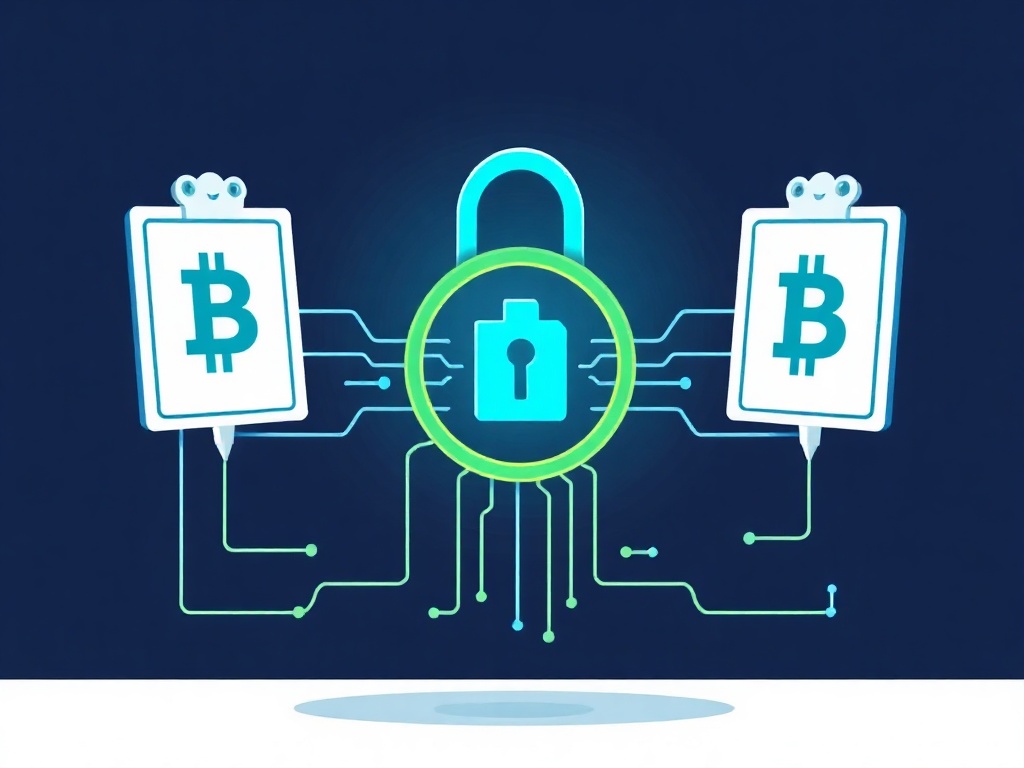
In the evolving landscape of Bitcoin privacy solutions, Chaumian CoinJoin coordinator has emerged as a critical component for users seeking enhanced anonymity without sacrificing decentralization. As Bitcoin transactions are inherently transparent on the blockchain, privacy-enhancing techniques like CoinJoin have become essential for those who value financial confidentiality. Among these techniques, Chaumian CoinJoin stands out due to its unique cryptographic foundation and robust privacy guarantees.
This comprehensive guide explores the chaumian coinjoin coordinator in depth, covering its technical underpinnings, operational mechanics, security considerations, and real-world applications. Whether you're a privacy advocate, a Bitcoin developer, or simply a curious user, understanding the role of a chaumian coinjoin coordinator will empower you to make informed decisions about your transaction privacy.
Understanding CoinJoin and the Role of a Coordinator
What Is CoinJoin?
CoinJoin is a privacy technique introduced by Bitcoin developer Gregory Maxwell in 2013. It allows multiple users to combine their Bitcoin transactions into a single transaction, making it difficult to trace the origin and destination of individual inputs and outputs. By mixing inputs from different participants, CoinJoin obfuscates the transaction graph, significantly improving privacy.
In a standard Bitcoin transaction, inputs and outputs are linked, revealing sender-receiver relationships. CoinJoin breaks this link by creating a transaction where multiple inputs are combined and redistributed among the same set of outputs. However, not all CoinJoin implementations are equal in terms of privacy and trust assumptions.
The Need for a Coordinator in CoinJoin
Most CoinJoin protocols require a coinjoin coordinator to facilitate the mixing process. The coordinator's role is to collect transaction data from participants, construct a valid Bitcoin transaction, and broadcast it to the network. While some decentralized alternatives exist, many popular implementations rely on a centralized or semi-trusted coordinator.
This is where Chaumian CoinJoin diverges. Unlike traditional CoinJoin, which may require trust in the coordinator to not steal funds or reveal identities, Chaumian CoinJoin uses cryptographic proofs to ensure that the coordinator cannot learn the relationship between inputs and outputs. This is achieved through blind signatures, a concept introduced by David Chaum in the 1980s.
The chaumian coinjoin coordinator thus operates under a unique trust model—one that minimizes the risk of privacy breaches while maintaining efficiency and usability.
How Chaumian CoinJoin Works: A Step-by-Step Breakdown
1. Participant Registration and Input Selection
The process begins when users decide to participate in a chaumian coinjoin coordinator-based mixing session. Each participant selects their Bitcoin inputs (UTXOs) and desired output amounts. Importantly, all participants must agree on the same output denomination to ensure fungibility and prevent linking.
For example, if five users each contribute 0.1 BTC, the coordinator will create a transaction with five inputs and five outputs of 0.1 BTC each. The key innovation in Chaumian CoinJoin is that the coordinator does not learn which input corresponds to which output.
2. Blind Signing: The Core of Chaumian Privacy
This is where the magic of Chaumian CoinJoin happens. Instead of revealing their inputs directly, participants use a cryptographic technique called blind signatures. Here’s how it works:
- Blinding: The participant creates a blinded version of their transaction data. This is done by multiplying the transaction data with a random blinding factor, making it unreadable to the coordinator.
- Signing: The chaumian coinjoin coordinator signs the blinded data using its private key. The signature is valid for the original unblinded transaction but does not reveal any information about the input-output mapping.
- Unblinding: The participant removes the blinding factor, recovering a valid signature on the original transaction data. The coordinator never sees the actual transaction details.
This process ensures that the coordinator can sign the transaction without learning which input belongs to which output, preserving privacy.
3. Transaction Construction and Broadcast
Once all participants have obtained blind signatures on their respective outputs, the chaumian coinjoin coordinator constructs the final transaction. The coordinator combines all inputs and outputs into a single transaction and broadcasts it to the Bitcoin network.
Because the coordinator never saw the input-output relationships, it cannot link any input to any output. This is the hallmark of Chaumian CoinJoin—privacy without trusting the coordinator.
4. Verification and Completion
After the transaction is confirmed on the blockchain, participants verify that their outputs were correctly included. Since the transaction is publicly verifiable, anyone can confirm that the chaumian coinjoin coordinator did not alter the transaction maliciously.
If any participant detects an anomaly, the protocol allows for dispute resolution or re-coordination, though such cases are rare in well-designed implementations.
Why Chaumian CoinJoin Stands Out: Advantages Over Traditional CoinJoin
1. Trustless Privacy Guarantees
One of the most significant advantages of using a chaumian coinjoin coordinator is the elimination of trust in the coordinator. In traditional CoinJoin, the coordinator could potentially log input-output mappings or even steal funds. While reputable coordinators may not act maliciously, the risk remains.
With Chaumian CoinJoin, the coordinator’s role is purely mechanical—it signs transactions without learning any sensitive information. This makes the protocol trustless in terms of privacy, aligning with Bitcoin’s ethos of decentralization and censorship resistance.
2. Resistance to Sybil and Denial-of-Service Attacks
Some CoinJoin implementations are vulnerable to Sybil attacks, where an attacker creates many fake participants to disrupt the mixing process. A chaumian coinjoin coordinator can mitigate this by requiring participants to prove ownership of their inputs before joining a session.
Additionally, the coordinator can enforce minimum input sizes or require participants to pay a small fee, reducing the incentive for attackers to spam the system. This makes Chaumian CoinJoin more robust against malicious actors.
3. Compatibility with Existing Bitcoin Infrastructure
Unlike some privacy solutions that require significant changes to Bitcoin’s protocol, Chaumian CoinJoin works with standard Bitcoin transactions. It does not require soft forks, new opcodes, or consensus changes. This makes it a practical and accessible solution for Bitcoin users today.
Many privacy-focused wallets, such as Wasabi Wallet and Samourai Wallet, have integrated Chaumian CoinJoin into their offerings, making it easy for users to participate without technical expertise.
4. Scalability and Efficiency
The blind signature process in Chaumian CoinJoin is computationally efficient, allowing for larger mixing sessions with minimal overhead. Unlike some advanced privacy techniques that require complex zero-knowledge proofs, Chaumian CoinJoin balances privacy with performance.
This efficiency makes it feasible to run a chaumian coinjoin coordinator as a service, even with limited resources, without compromising on privacy or security.
Security Considerations and Potential Risks
1. Coordinator Downtime and Availability
While the chaumian coinjoin coordinator does not learn sensitive data, its availability is crucial for the mixing process. If the coordinator goes offline or becomes unresponsive, participants may be unable to complete their transactions.
To mitigate this, some implementations use multiple coordinators or allow participants to switch coordinators mid-session. Decentralized alternatives, such as JoinMarket, also provide redundancy by using a peer-to-peer model where anyone can act as a coordinator.
2. Timing Attacks and Correlation Risks
Even with blind signatures, timing analysis can pose a privacy risk. If an attacker observes when a participant sends their blinded data and when the coordinator broadcasts the transaction, they might infer input-output relationships.
A well-designed chaumian coinjoin coordinator will randomize the timing of signature requests and transaction broadcasts to prevent such correlation. Participants can also use Tor or VPNs to obscure their network activity.
3. Input and Output Linking via Amounts
If participants choose unique output amounts, an attacker could link inputs to outputs based on transaction values. To maintain privacy, all participants in a chaumian coinjoin coordinator session should use the same output denomination.
For example, if four users each contribute 0.05 BTC, the outputs should also be 0.05 BTC. This ensures that the transaction is indistinguishable from others in the mixing session.
4. Regulatory and Compliance Risks for Coordinators
Operating a chaumian coinjoin coordinator may expose the operator to regulatory scrutiny, especially in jurisdictions with strict anti-money laundering (AML) laws. While the coordinator does not control the funds, it facilitates transactions that could be used for illicit purposes.
To address this, some coordinators implement proof-of-innocence mechanisms, where they can demonstrate that they did not learn any input-output mappings. Others operate under legal frameworks that distinguish between facilitating privacy and enabling crime.
Real-World Applications and Wallets Using Chaumian CoinJoin
1. Wasabi Wallet: A User-Friendly Chaumian CoinJoin Implementation
Wasabi Wallet is one of the most popular Bitcoin privacy wallets, and it relies on a chaumian coinjoin coordinator to provide robust anonymity. Wasabi’s coordinator, known as the Wasabi Coordinator, uses blind signatures to ensure that no one—including the coordinator—can link inputs to outputs.
Wasabi also implements several additional privacy features, such as:
- Coin Control: Users can manually select which inputs to mix.
- Post-Mix Labeling: Outputs are automatically labeled to track mixed coins separately from unmixed ones.
- Tor Integration: All communication with the coordinator happens over Tor to prevent IP-based tracking.
Wasabi’s approach has made Chaumian CoinJoin accessible to non-technical users, significantly increasing adoption.
2. Samourai Wallet: PayJoin and Stowaway with Chaumian Principles
Samourai Wallet takes a slightly different approach but incorporates Chaumian principles in its PayJoin and Stowaway features. While not a pure chaumian coinjoin coordinator implementation, Samourai uses similar cryptographic techniques to enhance privacy.
In PayJoin, two users collaborate to create a transaction where one user’s output is another user’s input, breaking the common-input-ownership heuristic. Stowaway extends this concept to multiple participants, effectively creating a mini CoinJoin session.
Samourai’s wallet also emphasizes stealth addresses and Stonewall transactions to further obfuscate transaction trails.
3. JoinMarket: Decentralized Alternative with Chaumian-Like Features
While JoinMarket is not a traditional chaumian coinjoin coordinator, it shares many similarities with Chaumian CoinJoin. JoinMarket operates on a peer-to-peer model where users can act as either makers (providing liquidity) or takers (requesting mixing).
The protocol uses CoinJoinXT, a variant of CoinJoin that incorporates elements of Chaumian blind signatures. This decentralized approach reduces reliance on a single coordinator, enhancing censorship resistance.
JoinMarket is favored by advanced users who prefer a trustless, open-source solution over centralized coordinators.
4. Sparrow Wallet: Advanced Privacy with Chaumian CoinJoin Support
Sparrow Wallet is a desktop Bitcoin wallet that supports Chaumian CoinJoin through its integration with Wasabi’s coordinator. Sparrow provides users with granular control over their CoinJoin sessions, including custom denomination selection and input prioritization.
The wallet also supports PayJoin, making it a versatile tool for users who prioritize privacy without sacrificing usability.
Setting Up and Using a Chaumian CoinJoin Coordinator
1. Choosing the Right Wallet
To participate in a chaumian coinjoin coordinator session, you’ll need a wallet that supports the protocol. Popular options include:
- Wasabi Wallet (recommended for beginners)
- Samourai Wallet (for Android users)
- Sparrow Wallet (for desktop users)
- JoinMarket (for advanced users)
Each wallet has its own interface and features, but all follow the same core principles of Chaumian CoinJoin.
2. Preparing Your Bitcoin for Mixing
Before joining a chaumian coinjoin coordinator session, ensure that your Bitcoin is in a single UTXO. If your funds are spread across multiple addresses, you may need to consolidate them first. Most privacy wallets provide tools for coin control, allowing you to select specific inputs for mixing.
It’s also advisable to use a new Bitcoin address for receiving mixed funds to avoid address reuse, which can compromise privacy.
3. Initiating a CoinJoin Session
In Wasabi Wallet, for example, initiating a CoinJoin is as simple as selecting your UTXO and clicking the CoinJoin button. The wallet will connect to the chaumian coinjoin coordinator and begin the mixing process.
The wallet will display the current coordinator’s fee, which is typically a small percentage of the mixed amount. Wasabi’s coordinator charges a 0.3% fee, which is distributed among miners and the coordinator.
4. Monitoring and Completing the Mix
Once the session begins, the wallet will show the progress of the CoinJoin. Depending on the number of participants and the coordinator’s load, the process can take anywhere from a few minutes to several hours.
After the transaction is confirmed, your mixed Bitcoin will appear in a new wallet label (e.g., "Post-Mix"). It’s important to avoid spending mixed and unmixed coins together, as this can reduce privacy.
5. Best Practices for Maximum Privacy
To get the most out of your chaumian coinjoin coordinator experience, follow these best practices:
- Use Tor or a VPN: Prevent your IP address from being linked to your CoinJoin session.
- Mix Regularly: The more you mix, the harder it is to trace your transactions.
- Avoid Reusing Addresses: Always generate new addresses for receiving funds.
- Wait for Confirmations: Ensure your mixed coins are confirmed before spending them.
- Combine with Other Privacy Tools: Use techniques like PayJoin, stealth addresses, and Coin Control for layered privacy.
Future of Chaumian CoinJoin and Bitcoin Privacy
1. Advancements in Blind Signature Technology
Researchers are exploring new cryptographic techniques to enhance Chaumian CoinJoin. One promising area is the use of threshold signatures, where multiple coordinators collaborate to sign transactions without any single party learning the input-output mappings.
This could lead to even more decentralized and resilient chaumian coinjoin coordinator models, reducing reliance on trusted third parties.
2. Integration with Lightning Network
The Lightning Network, Bitcoin’s layer-2 scaling solution, presents new opportunities for privacy. While Lightning transactions are not natively private, techniques like Lightning CoinJoin could combine the scalability of Lightning with the privacy of Chaumian CoinJoin.
A chaumian coinjoin coordinator operating on Lightning could enable instant, low-cost, and private transactions, further enhancing Bitcoin’s fungibility.
3. Regulatory Challenges and Privacy Advocacy
As governments worldwide crack down on financial privacy, operators of chaumian coinjoin coordinators may face increasing regulatory pressure. Privacy advocates argue that tools like CoinJoin are essential for protecting financial freedom, while regulators view them as potential enablers of illicit activity.
The future of Chaumian CoinJoin will depend on striking a balance between privacy rights and regulatory compliance. Decentralized models, such as JoinMarket, may offer a path forward by distributing the responsibility among many participants.
4. Education and Adoption Growth
One of the biggest barriers to widespread adoption of Chaumian CoinJoin is lack of awareness. Many Bitcoin users are unaware of the privacy risks associated with transparent transactions or how to use tools like CoinJoin effectively.
In

The Role of a Chaumian CoinJoin Coordinator in Enhancing Bitcoin Privacy and DeFi Synergy
As a DeFi and Web3 analyst, I’ve observed that privacy-enhancing technologies like Chaumian CoinJoin are becoming increasingly critical in the Bitcoin ecosystem, particularly as institutional adoption grows and regulatory scrutiny intensifies. A Chaumian CoinJoin coordinator serves as the backbone of this privacy mechanism, facilitating trustless mixing of transactions while preserving the fungibility of Bitcoin. Unlike traditional mixers, which rely on centralized operators to shuffle funds, a well-designed coordinator leverages cryptographic proofs—such as zero-knowledge attestations—to ensure that participants neither collude nor misappropriate funds. This innovation bridges the gap between Bitcoin’s pseudonymous nature and the demand for regulatory compliance, making it a compelling solution for both privacy-conscious users and institutions seeking to mitigate exposure to illicit transaction tracing.
From a practical standpoint, the coordinator’s role extends beyond mere transaction aggregation. In DeFi contexts, where Bitcoin is increasingly integrated via wrapped assets or sidechains, a Chaumian CoinJoin coordinator can enhance the privacy of cross-chain interactions without compromising auditability. For instance, when users bridge Bitcoin to Ethereum via protocols like tBTC or wBTC, a coordinator could anonymize the on-chain footprint of these transactions, reducing the risk of front-running or MEV extraction. However, the effectiveness of such a system hinges on robust cryptographic implementations and decentralized coordination to prevent single points of failure. Projects like Wasabi Wallet and JoinMarket have demonstrated the viability of this model, but scalability remains a challenge. As Bitcoin’s role in DeFi expands, the demand for privacy-preserving coordinators will likely grow, provided they can balance efficiency, security, and decentralization.