Monero vs Zcash Privacy: Which Cryptocurrency Offers Superior Anonymity in 2024?
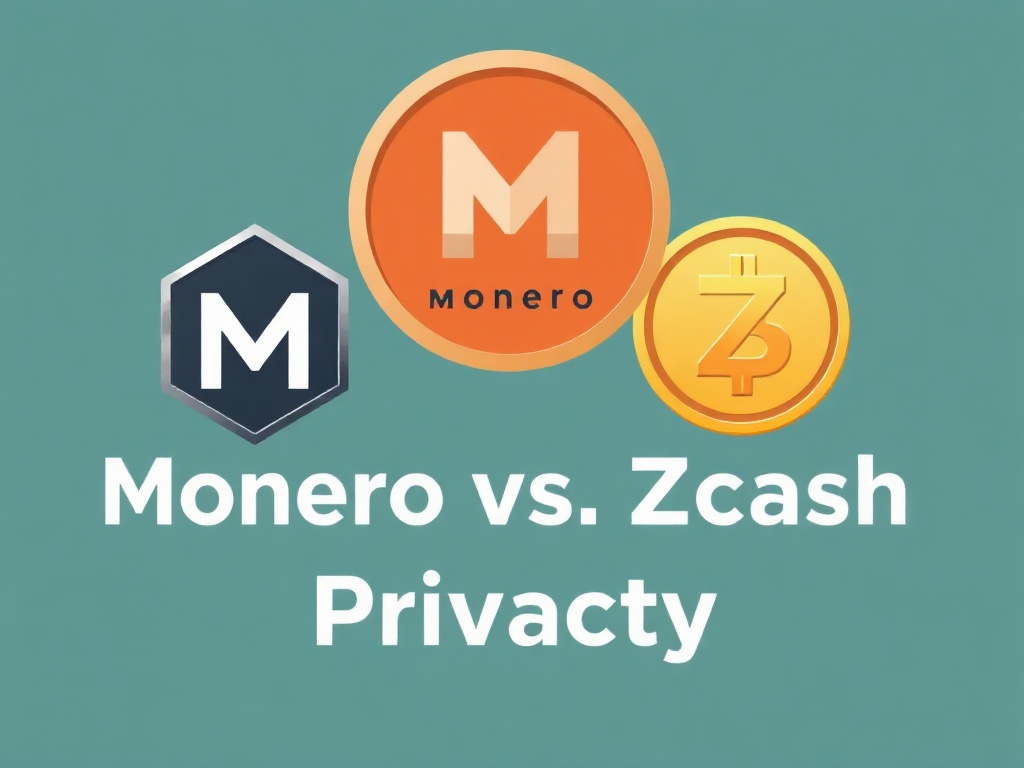
In the ever-evolving world of cryptocurrencies, privacy remains a top priority for users seeking financial anonymity and security. Among the leading privacy-focused cryptocurrencies, Monero (XMR) and Zcash (ZEC) stand out as the most prominent options. Both are designed to obscure transaction details, but they employ fundamentally different approaches to achieving privacy. This comprehensive guide explores the Monero vs Zcash privacy debate, analyzing their technologies, strengths, weaknesses, and real-world implications for users in 2024.
As regulatory scrutiny intensifies and blockchain transparency becomes more pervasive, understanding the nuances of Monero vs Zcash privacy is crucial for investors, privacy advocates, and everyday users. Whether you're considering which coin to hold, transact with, or integrate into your financial strategy, this comparison will help you make an informed decision.
Understanding the Core Privacy Technologies
Monero’s Ring Signatures and Stealth Addresses
Monero is often hailed as the gold standard for privacy in cryptocurrency due to its robust, battle-tested cryptographic techniques. At the heart of Monero’s privacy model are ring signatures and stealth addresses, which work together to obfuscate sender identities, transaction amounts, and recipient details.
Ring Signatures: Monero uses ring signatures to mix a user’s transaction with others in the network, making it impossible to determine the actual sender. Each transaction is signed by a group of possible signers (a "ring"), and only one is valid—the others are decoys. This ensures that even if an observer tracks the blockchain, they cannot link a specific transaction to a particular wallet.
Stealth Addresses: To protect recipient privacy, Monero employs stealth addresses. When a user receives XMR, the sender generates a one-time address derived from the recipient’s public address. This means that even if the blockchain is public, the actual recipient’s address remains hidden, preventing anyone from linking transactions to a specific wallet.
Additionally, Monero uses Ring Confidential Transactions (RingCT) to hide transaction amounts. This ensures that while the transaction is verified on the blockchain, the exact value sent remains confidential. Together, these features make Monero untraceable and unlinkable, providing a high level of privacy by default.
Zcash’s zk-SNARKs and Selective Transparency
Zcash takes a different approach to privacy by leveraging zero-knowledge proofs (zk-SNARKs), a cutting-edge cryptographic method that allows transactions to be verified without revealing any underlying data. Unlike Monero, which prioritizes privacy by default, Zcash offers users the choice between transparent transactions (similar to Bitcoin) and shielded transactions (private).
zk-SNARKs Explained: Zcash’s privacy mechanism relies on zero-knowledge succinct non-interactive arguments of knowledge (zk-SNARKs). When a user sends ZEC via a shielded transaction, the transaction is encrypted, and the sender proves—without revealing details—that they have the necessary funds and are not double-spending. This proof is verified by the network, ensuring the transaction is valid without exposing sensitive information.
Selective Transparency: One of Zcash’s unique features is its ability to offer selective transparency. Users can choose to make transactions public (transparent) or private (shielded). This flexibility is useful for audits, regulatory compliance, or simply when privacy isn’t a concern. However, it also means that not all Zcash transactions are private by default, which can be a drawback for users seeking maximum anonymity.
Zcash also supports Sapling and Orchard upgrades, which improve the efficiency and usability of shielded transactions. These upgrades reduce the computational resources required for zk-SNARKs, making private transactions faster and more accessible.
Comparing Privacy Features: Monero vs Zcash Privacy
Default Privacy vs. Opt-In Privacy
The most significant difference between Monero and Zcash lies in their approach to privacy. Monero enforces privacy by default—every transaction is private, and there is no option to make it public. This ensures that all users benefit from anonymity without needing to take additional steps.
In contrast, Zcash offers opt-in privacy. While shielded transactions are private, transparent transactions (which reveal sender, receiver, and amount) are also common. This opt-in model means that users must actively choose privacy, which can be a disadvantage for those who forget or overlook this step. Studies have shown that a significant portion of Zcash transactions are transparent, reducing the overall privacy of the network.
Implications: For users who prioritize privacy above all else, Monero’s default privacy is a major advantage. It eliminates the risk of accidental transparency and ensures that all transactions are shielded. Zcash, while powerful, requires user diligence to maintain privacy, which may not be ideal for everyone.
Transaction Unlinkability and Fungibility
Fungibility is a critical aspect of privacy in cryptocurrency. A fungible asset is one where each unit is indistinguishable from another, preventing tracing or blacklisting. Monero excels in fungibility due to its ring signatures and stealth addresses, which ensure that every XMR is identical and untraceable.
Zcash, on the other hand, faces challenges with fungibility because transparent transactions can be linked to specific addresses. Even shielded transactions may not be fully fungible if there are concerns about the origin of funds. For example, if a shielded transaction is later linked to a transparent address involved in illicit activity, the entire transaction history could be scrutinized.
Real-World Impact: Monero’s strong fungibility makes it more resistant to censorship and blacklisting. In contrast, Zcash’s mixed approach to privacy can lead to situations where certain transactions or addresses are flagged, reducing its fungibility.
Adoption and Network Effects
The privacy features of Monero and Zcash are only as effective as their adoption. Monero has seen widespread acceptance in both legal and illicit markets due to its strong privacy guarantees. It is widely used in darknet markets, peer-to-peer transactions, and regions with strict capital controls. This broad adoption enhances Monero’s privacy by increasing the anonymity set—the number of possible senders or receivers in a transaction.
Zcash, while respected in the cryptocurrency community, has not achieved the same level of adoption for private transactions. Many exchanges and services do not support shielded transactions, and some users may not even be aware of the privacy features. Additionally, Zcash’s association with the Electric Coin Company (ECC) and its corporate backing have led to some skepticism among privacy purists who prefer decentralized, community-driven projects like Monero.
Network Effects: Monero’s larger user base and higher transaction volume for private transactions contribute to its superior privacy in practice. The more users there are, the harder it becomes to deanonymize any single transaction. Zcash, while improving, still lags behind in this regard.
Security and Decentralization: Which is More Robust?
Monero’s Decentralized and Community-Driven Approach
Monero is developed by a decentralized team of contributors, with no single entity controlling its development or direction. This ensures that Monero remains resistant to censorship and corporate influence. The project is open-source, and its code is audited by independent researchers, reducing the risk of backdoors or vulnerabilities.
ASIC Resistance: Monero uses a mining algorithm called RandomX, which is designed to be resistant to ASIC (Application-Specific Integrated Circuit) mining. This ensures that mining remains accessible to individuals using consumer-grade hardware, promoting decentralization and preventing a small group of miners from controlling the network.
Regular Upgrades: Monero undergoes frequent network upgrades to improve privacy, security, and scalability. These upgrades are community-driven and implemented through hard forks, ensuring that the network evolves in a transparent and decentralized manner.
Zcash’s Corporate Backing and Potential Centralization Risks
Zcash was founded by the Electric Coin Company (ECC) and the Zcash Foundation, both of which play significant roles in its development and governance. While Zcash is open-source, its corporate backing raises concerns about centralization and potential conflicts of interest.
Founders’ Reward: During Zcash’s early years, a portion of the mining rewards (20%) was allocated to the ECC and Zcash Foundation. While this reward has since expired, it raised questions about the project’s long-term independence. Some critics argue that corporate influence could lead to decisions that prioritize business interests over user privacy.
Mining Centralization: Zcash uses the Equihash mining algorithm, which is more susceptible to ASIC mining. This has led to concerns about mining centralization, as large mining pools with specialized hardware could dominate the network. While Zcash has taken steps to mitigate this, such as introducing Equihash 125,4, the risk remains.
Trusted Setup: One of Zcash’s most controversial aspects is its trusted setup ceremony, which was required to generate the initial zk-SNARK parameters. This ceremony involved multiple participants who each contributed a piece of the secret key, ensuring that no single entity could compromise the system. While the ceremony was widely regarded as secure, it remains a point of criticism for those who prefer systems without trusted setups, such as Monero.
Resistance to Attacks and Vulnerabilities
Both Monero and Zcash have demonstrated resilience against attacks, but their approaches differ. Monero’s ring signatures and stealth addresses make it highly resistant to blockchain analysis, even as computational power increases. The use of RingCT further complicates efforts to trace transactions.
Zcash’s zk-SNARKs provide strong privacy guarantees, but they are not immune to theoretical attacks. For example, if a quantum computer were to break the elliptic curve cryptography used in zk-SNARKs, Zcash’s privacy could be compromised. Monero, on the other hand, uses cryptographic primitives that are believed to be quantum-resistant, such as ed25519 signatures.
Side-Channel Attacks: Both projects have had to address side-channel attacks, such as timing attacks or power analysis, which could potentially leak information. Monero has implemented countermeasures like bulletproofs to enhance security, while Zcash has focused on improving the efficiency of its zk-SNARKs to reduce attack surfaces.
Real-World Use Cases and Regulatory Challenges
Monero’s Dominance in Privacy-Centric Markets
Monero’s strong privacy features have made it a favorite in markets where anonymity is paramount. It is widely accepted in darknet markets, peer-to-peer transactions, and regions with strict financial regulations. For example, Monero is often used in countries with capital controls, such as Venezuela or Russia, where users seek to bypass government restrictions on financial transactions.
Merchant Adoption: Monero is supported by a growing number of merchants and payment processors, including XMR.to, Cryptonator, and Travala. Its privacy-by-default approach makes it an attractive option for businesses that prioritize customer anonymity.
Regulatory Scrutiny: Monero’s strong privacy features have also made it a target for regulators. Exchanges like Kraken and Bitfinex have delisted Monero in certain jurisdictions due to compliance concerns. Additionally, financial watchdogs such as FATF (Financial Action Task Force) have scrutinized privacy coins, leading to increased monitoring and potential restrictions.
Zcash’s Struggles with Adoption and Compliance
Zcash’s opt-in privacy model has limited its adoption in privacy-centric markets. While shielded transactions are private, the prevalence of transparent transactions means that Zcash does not offer the same level of anonymity as Monero. This has led to criticism from privacy advocates who argue that Zcash’s privacy features are not as robust in practice.
Exchange Support: Many major exchanges do not support Zcash’s shielded transactions, or they impose restrictions on their use. For example, Coinbase and Binance have limited or disabled shielded transactions due to compliance concerns. This lack of support reduces Zcash’s usability and adoption.
Regulatory Challenges: Zcash’s corporate backing and selective transparency have made it more palatable to regulators. However, this has also led to criticism from privacy purists who argue that Zcash’s compliance-friendly approach undermines its privacy guarantees. In 2022, the U.S. Treasury Department sanctioned a darknet market that used Zcash, highlighting the coin’s association with illicit activities.
Institutional Interest: Despite its challenges, Zcash has gained some traction in institutional circles. Companies like JPMorgan Chase and Fidelity Investments have explored Zcash’s privacy features for enterprise use cases, such as confidential transactions in banking. However, these use cases are still in their infancy and do not address the broader privacy concerns of individual users.
Which One Should You Choose? Monero vs Zcash Privacy in 2024
Factors to Consider When Choosing Between Monero and Zcash
When deciding between Monero and Zcash, it’s essential to consider your specific needs and priorities. Here are the key factors to evaluate:
- Privacy Requirements: If your primary concern is maximum privacy by default, Monero is the clear choice. Its ring signatures, stealth addresses, and RingCT ensure that all transactions are private and untraceable. Zcash, while powerful, requires users to actively choose privacy, which may not be suitable for everyone.
- Fungibility: Monero’s strong fungibility makes it more resistant to censorship and blacklisting. Zcash’s mixed approach to privacy can lead to situations where transactions are flagged, reducing its fungibility.
- Adoption and Usability: Monero has broader adoption in privacy-centric markets and is supported by more merchants and payment processors. Zcash’s opt-in privacy model limits its usability, and many exchanges do not support shielded transactions.
- Security and Decentralization: Monero’s community-driven development and ASIC-resistant mining algorithm promote decentralization and security. Zcash’s corporate backing and potential centralization risks may be a concern for some users.
- Regulatory Compliance: If you need to comply with financial regulations, Zcash’s selective transparency may be more appealing. However, this comes at the cost of reduced privacy for transparent transactions.
- Future-Proofing: Monero’s frequent upgrades and quantum-resistant cryptography make it a more future-proof choice. Zcash’s reliance on zk-SNARKs and elliptic curve cryptography may be vulnerable to future advances in cryptanalysis.
Use Cases for Monero
Monero is ideal for users who prioritize privacy above all else. Some common use cases include:
- Darknet Markets: Monero is widely accepted in darknet markets due to its strong privacy features.
- Peer-to-Peer Transactions: Users who want to send money to friends or family without exposing their financial history should consider Monero.
- Regions with Capital Controls: In countries with strict financial regulations, Monero provides a way to bypass government restrictions.
- Merchant Payments: Businesses that prioritize customer anonymity can use Monero for transactions.
- Long-Term Holding: Monero’s strong privacy features make it a popular choice for long-term investors who want to protect their financial privacy.
Use Cases for Zcash
Zcash is better suited for users who need a balance between privacy and compliance. Some common use cases include:
- Enterprise Confidential Transactions: Companies that need to keep transaction details private for auditing or compliance purposes may prefer Zcash.
- Auditable Transparency: Users who want the option to make transactions public for regulatory or auditing purposes may find Zcash’s selective transparency useful.
- Institutional Adoption: Zcash’s corporate backing and compliance-friendly approach make it more appealing to institutional investors and businesses.
- Hybrid Privacy Models: Users who want the flexibility to choose between private and transparent transactions may prefer Zcash.
Future Developments and the Evolution of Privacy Coins
Monero’s Roadmap and Upcoming Upgrades
Monero’s development is driven by a community of contributors who prioritize privacy and decentralization. Some of

As a digital assets strategist with a background in quantitative finance and on-chain analytics, I’ve closely examined the privacy trade-offs between Monero and Zcash—two of the most prominent privacy-focused cryptocurrencies. When evaluating monero vs zcash privacy, the differences are stark and rooted in their underlying cryptographic designs. Monero’s approach is holistic, leveraging ring signatures, stealth addresses, and confidential transactions to obscure sender, receiver, and transaction amounts by default. This makes Monero the gold standard for absolute privacy in practice, as its privacy features are baked into the protocol and not optional. In contrast, Zcash offers selective privacy through zk-SNARKs, allowing users to shield transactions but defaulting to transparent addresses unless explicitly chosen. While Zcash’s cryptography is mathematically elegant, its reliance on optional privacy introduces real-world risks—such as metadata leakage or regulatory scrutiny—where users may unknowingly expose transaction details.
From a practical standpoint, the choice between Monero and Zcash hinges on use case and risk tolerance. Monero’s privacy is non-negotiable, making it ideal for users prioritizing anonymity above all else, though its regulatory challenges in some jurisdictions cannot be ignored. Zcash, meanwhile, appeals to those who need occasional privacy or operate in compliant environments, but its optional privacy model demands disciplined user behavior to avoid undermining its cryptographic protections. For institutional investors or privacy-conscious traders, Monero’s ironclad privacy often outweighs Zcash’s flexibility, especially given the latter’s historical vulnerabilities, such as the 2019 counterfeiting bug. Ultimately, monero vs zcash privacy isn’t just a technical debate—it’s a strategic one, where the default privacy of Monero aligns with the highest standards of financial confidentiality.