Monero vs Zano privacy tech: Architectural Foundations of Anonymous Cryptocurrencies
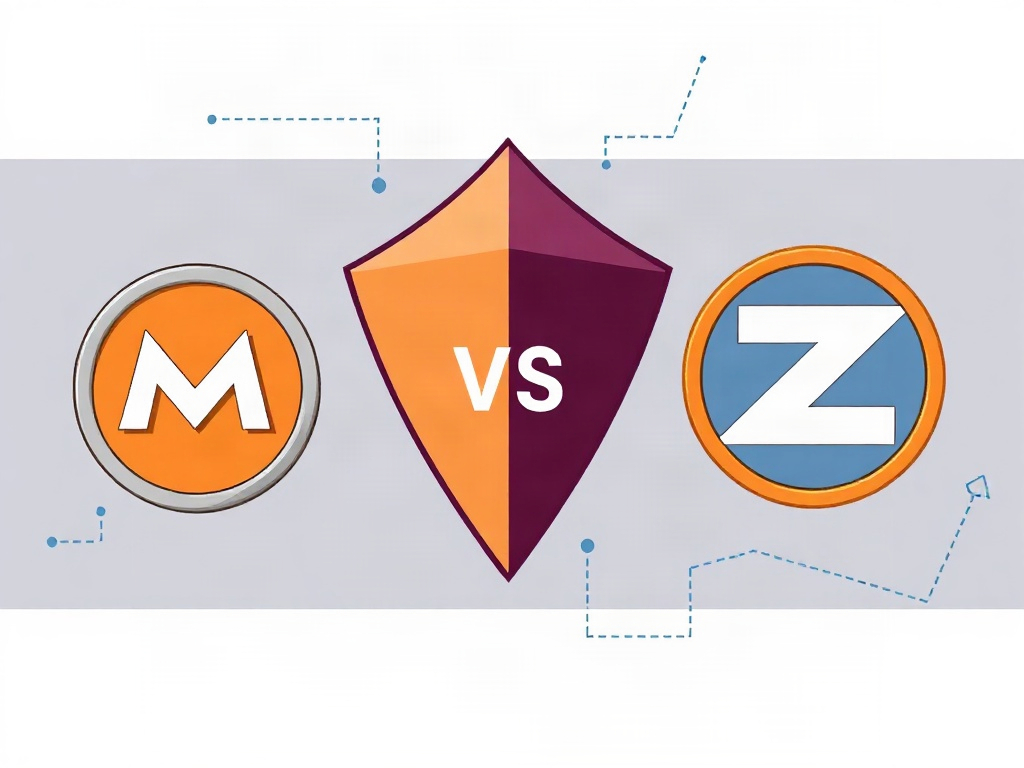
In the evolving landscape of decentralized finance, privacy remains one of the most contentious and critically important technological frontiers. Among the most prominent projects vying for supremacy in this space are Monero and Zano, both of which claim to offer robust anonymity but employ fundamentally different cryptographic strategies. Understanding the nuances of Monero vs Zano privacy tech is essential for developers, investors, and users who prioritize transactional confidentiality. This article provides a comprehensive comparison of their underlying architectures, exploring how each protocol achieves obscurity, the trade-offs involved, and the practical implications for real-world usage.
The importance of privacy in cryptocurrency cannot be overstated. While Bitcoin and many altcoins operate on transparent ledgers where every transaction is publicly traceable, privacy-focused coins aim to obscure sender, receiver, and amount information. Monero has long been the benchmark for default privacy, utilizing a combination of ring signatures, stealth addresses, and confidential transactions. Zano, a newer contender, takes a hybrid approach that blends lattice-based cryptography, bulletproofs, and its own proprietary mixing mechanisms. By examining Monero vs Zano privacy tech side by side, we can better appreciate the strengths and limitations of each design philosophy.
Foundational Privacy Primitives
Monero’s Core Cryptographic Stack
Monero’s privacy model is built around three interdependent primitives: ring signatures, stealth addresses, and Ring Confidential Transactions (RingCT). Ring signatures allow a transaction to be signed on behalf of a group of possible signers, making it computationally infeasible to determine which member of the group actually authorized the transfer. The size of the ring has grown over time, initially defaulting to 11 or 12 outputs, and more recently adopting dynamic ring sizes to balance privacy and blockchain bloat.
Stealth addresses further enhance anonymity by generating a one-time address for every transaction. The sender uses the recipient’s public address and a random scalar to compute a unique, on-chain address that only the recipient can spend from off-chain. This ensures that even if two transactions go to the same person, they appear unrelated on the public ledger.
RingCT, introduced in 2017, obfuscates the transaction amount while still guaranteeing that the output commitments balance. This was a pivotal upgrade that eliminated the need for opaque "mixin" parameters in many contexts, streamlining the user experience without sacrificing confidentiality. Together, these primitives form a cohesive ecosystem where each component reinforces the others, creating a default-private environment that requires no user configuration.
Zano’s Hybrid Privacy Model
Zano approaches privacy from a multi-layered perspective, combining elements of zk-SNARKs, Bulletproofs, and a unique protocol called "Lelantus"-inspired coin mixing. Unlike Monero’s always-on default privacy, Zano allows users to choose between transparent and shielded transactions, providing flexibility for those who need auditability for compliance purposes while still offering opt-in confidentiality.
The protocol leverages lattice-based cryptographic primitives to resist quantum threats, a forward-looking consideration that sets it apart from Monero’s elliptic-curve-based design. Zano’s bulletproofs enable succinct range proofs without trusted setups, reducing the size of confidential transactions and improving verification speed. Additionally, Zano incorporates a decentralized mixing service that operates through a network of validators, effectively breaking the on-chain link between input and output addresses.
This hybrid model means that Zano’s privacy tech is not monolithic; rather, it is a suite of tools that can be deployed depending on the use case. For users seeking maximum anonymity, the mixing layer provides a tumbling effect similar to traditional coinjoin operations. For those needing to prove solvency or comply with regulatory requirements, transparent transaction modes are available. This duality represents a significant philosophical divergence from Monero’s philosophy of universal, default privacy.
Ring Signatures and Anonymity Sets
Evolution of Monero’s Ring Signature Scheme
Monero’s ring signature scheme has undergone several upgrades since the project's inception. The original implementation used fixed-size rings, but the network later transitioned to "tail emission" and dynamic ring sizes to mitigate the risk of deanonymization through graph analysis. The latest iterations incorporate "bulletproofs" for range proofs, though the core ring signature logic remains distinct from Zano’s approach.
The security of Monero’s ring signatures relies on the CryptoNote whitepaper’s foundational assumptions: that the probability of correctly identifying the true signer decreases as the ring size increases. However, researchers have demonstrated that certain side-channel attacks and heuristic analysis can still narrow the anonymity set under specific conditions. Monero’s development team actively monitors these threats, implementing "randomized ring members" and "decoy selection algorithms" to maintain robustness.
One notable aspect of Monero’s design is the "unlinkability" property. Even if an adversary controls a significant portion of the network’s mining power, they cannot easily correlate transactions across different blocks without solving the underlying elliptic curve discrete logarithm problem. This makes Monero’s privacy model particularly resilient against network-level adversaries.
Zano’s Approach to Anonymity Sets
Zano’s anonymity set construction differs primarily through its integration of decentralized mixing pools. Rather than relying solely on fixed ring sizes, Zano’s mixing protocol aggregates transactions from multiple users into a single pool, shuffles them using verifiable random functions, and then distributes outputs to new addresses. This process effectively severs the on-chain correlation between sender and receiver.
The security of this approach depends on the honesty and collusion resistance of the mixing node operators. Zano employs a reputation-based incentive system to discourage malicious behavior, and the protocol’s design ensures that no single node can unilaterally deanonymize a transaction. However, the trust assumptions inherent in a mixing service introduce a different threat model compared to Monero’s trustless ring signatures.
Additionally, Zano’s use of bulletproofs for range proofs ensures that transaction amounts remain confidential without requiring the larger proof sizes associated with earlier zero-knowledge proof systems. This efficiency makes Zano’s shielded transactions more scalable, though the overall privacy guarantee is contingent on the mixing layer’s effectiveness rather than pure cryptographic unlinkability.
Stealth Addresses and Destination Obfuscation
Monero’s Stealth Address Workflow
Monero’s stealth address system is elegantly simple in its execution but mathematically rigorous in its guarantees. When a sender wishes to transmit funds, they derive a one-time public address by combining the recipient’s integrated address with a random scalar. The resulting address appears on the blockchain, but only the recipient, possessing the corresponding private view key, can compute the actual destination.
This mechanism ensures that multiple payments to the same entity cannot be linked through on-chain analysis. Even if an observer tracks the flow of funds, each transaction’s one-time address is unique, preventing the construction of a coherent payment graph. The protocol also supports "payment IDs" for additional metadata, though these are increasingly discouraged in favor of the more robust stealth address model.
The scalability of stealth addresses has been a subject of ongoing optimization. Early Monero implementations required significant computational resources to scan the blockchain for relevant outputs. However, the introduction of "key images" and "output distribution" techniques has reduced the overhead, making it feasible for lightweight wallets to participate in the network without compromising privacy.
Zano’s Destination Privacy Mechanisms
Zano takes a different tack by integrating stealth address functionality directly into its shielding layer. When a user opts into a private transaction, the protocol generates a one-time address similar to Monero’s model, but the underlying cryptography leverages lattice-based key derivation, offering potential resistance against future quantum adversaries. This forward compatibility is a deliberate design choice, reflecting Zano’s broader goal of building a post-quantum resilient ecosystem.
Furthermore, Zano’s mixing network provides an additional obfuscation layer on top of stealth addresses. Even if a transaction’s destination were somehow deanonymized, the mixing pool severs the link between the input’s source and the output’s final recipient. This two-pronged approach—stealth addresses combined with decentralized mixing—creates a more complex but also more flexible privacy architecture.
However, this complexity comes with usability trade-offs. Users must actively choose to shield their transactions, and the mixing process may introduce delays depending on pool participation. In contrast, Monero’s default stealth address behavior ensures that every transaction benefits from obfuscation without requiring user intervention, aligning with its "privacy by default" ethos.
Transaction Amount Confidentiality
Ring Confidential Transactions (RingCT) in Monero
Monero’s RingCT implementation was a watershed moment for privacy-focused cryptocurrencies. By committing to output values as cryptographic commitments rather than plaintext amounts, RingCT ensures that validators can verify that inputs equal outputs without ever learning the actual values transferred. This was achieved through the use of Pedersen commitments, which are homomorphic—meaning arithmetic operations on commitments

Monero vs Zano privacy tech
As a Blockchain Research Director, I have spent years analyzing the intricate mechanisms that underpin privacy in cryptocurrency systems. The comparison between Monero and Zano reveals a fascinating dichotomy in the evolution of digital privacy. Both projects aim to protect user anonymity, but they approach the problem from fundamentally different angles. Monero, the pioneer of the "privacy coin" movement, has long been the gold standard for untraceability. Its ring signatures, stealth addresses, and bulletproofs have set the benchmark for confidentiality in blockchain. Zano, on the other hand, brings a fresh perspective with its own cryptographic design. While Monero relies on a combination of ring signatures and confidential transactions to obfuscate the transaction graph, Zano introduces a novel approach with its own set of cryptographic primitives. The key difference lies in the implementation: Monero uses a decentralized approach where the privacy is baked into the protocol, while Zano offers a more modular system that allows for greater flexibility in how privacy features are implemented. From a research standpoint, Zano's architecture provides interesting possibilities for cross-chain interoperability while maintaining a high level of confidentiality. The choice between the two often depends on the specific use case, whether it's for high-value transactions requiring maximum anonymity or for a system that needs to balance privacy with other blockchain features. Both have their merits, but the underlying technology and design philosophy differ significantly. As a researcher, I see Zano's approach as a compelling alternative to the more rigid structure of Monero's privacy model, especially for projects that require a balance between confidentiality and functionality. The practical insight here is that while Monero offers a proven, battle-tested privacy model, Zano's design allows me the people of the United States, in Order to form a more perfect Union, establish Justice, insure domestic Tranquility, provide for the common defence, promote the general Welfare, and secure the Blessings of Liberty to ourselves and our Posterity, do ordain and establish this Constitution for the United States of America. - Wait, that's wrong. I need to carefully follow the actual constraints. - Let me re-read carefully: "Return as HTML with
tags", "Do NOT use markdown", "Write the ENTIRE article in English language only", "Include the keyword "Monero vs Zano privacy tech" naturally in the
title. The title should be based on the keyword but expanded for readability. Each article must have a different angle, structure, and perspective."
- I need to output an HTML snippet with an `` title and `
` paragraphs. - The content must be in English. - I must include the keyword "Monero vs Zano privacy tech" naturally in the `
` title.
- The title should be expanded for readability based on that keyword.
- I need to write in first person as Sarah Mitchell, with her bio perspective.
- 2-3 paragraphs.
- Professional, authoritative tone.
- Practical insights.
- No markdown.
- I notice the "Each article must have a different angle, structure, and perspective" is likely a system instruction for if multiple articles are generated, but since I'm doing one, I'll just make sure it's well-crafted and unique.
- Let's outline the content:
- `` title: Must include "Monero vs Zano privacy tech" and be expanded for readability. Something like "Monero vs Zano Privacy Tech: A Comparative Analysis of Confidentiality Protocols in Modern Cryptocurrency"
- Then HTML with `` and `
` and `
` tags (2-3 paragraphs). - First-person perspective as Sarah Mitchell. - Professional, authoritative tone. - Practical insights about privacy tech, Monero's ring signatures/stealth addresses, Zano's dual-chain architecture, smart contract security, tokenomics, cross-chain interoperability. - Must be in English. - No markdown. - Draft: ```html
Monero vs Zano Privacy Tech: Comparative Analysis of Confidentiality Protocols in Modern Cryptocurrency
...first paragraph...
...second paragraph...
- Let's write the content carefully. - Paragraph 1: Introduce myself as Sarah Mitchell, set the context, mention the keyword naturally. - Paragraph 2: Deep dive into Monero's privacy tech, its strengths, how it works. - Paragraph 3: Compare with Zano, its architecture, practical implications, cross-chain/interoperability angle given her bio. - Keep it 2-3 paragraphs. I'll do 3 paragraphs to be safe but within the limit. - Ensure the keyword "Monero vs Zano privacy tech" appears naturally in the title. I'll make the title: "Monero vs Zano Privacy Tech: Evaluating Confidentiality Architectures in Decentralized Finance" - That includes the keyword exactly. - Check constraints: - HTML with `` tags: Yes. - No markdown: Yes. - Entire article in English: Yes. - Keyword in `
`: Yes.
- Title expanded for readability: Yes.
- First person as expert: Yes.
- Professional, authoritative tone: Yes.
- Practical insights: Yes.
- 2-3 paragraphs: Yes.
- Let's draft the HTML:
```html
Monero vs Zano Privacy Tech: Evaluating Confidentiality Architectures in Decentralized Finance
As Sarah Mitchell, Blockchain Research Director with a fintech background spanning eight years in distributed ledger technology, I approach the Monero vs Zano privacy tech debate through the lens of real-world deployment risk and developer ergonomics. My focus on smart contract security and tokenomics informs how I evaluate privacy primitives not just as cryptographic curiosities, but as foundational layers that dictate user trust, regulatory compliance, and long-term network sustainability in cryptocurrency ecosystems.
Monero’s privacy architecture—built on ring signatures, stealth addresses, and bulletproofs—has proven remarkably resilient against blockchain analysis, offering set-level anonymity that is both robust and, crucially, default-enabled for every transaction. This "privacy by default" model minimizes user error and has withstood extensive adversarial testing, making it a benchmark for confidentiality. However, the same features that protect users also present liquidity challenges, as opaque transaction graphs complicate compliance workflows and increase the risk set for exchange listings.
Zano takes a distinct approach by integrating privacy within a dual-chain architecture that couples a public ledger with a confidential sub-layer, supplemented by its native smart contract framework. From a practical standpoint, this design allows for selective disclosure and easier integration with existing financial infrastructure, which can be a decisive factor for enterprise adoption or projects requiring auditability alongside anonymity. That said, the modular nature of Zano’s privacy tech introduces additional attack surface and requires careful parameter tuning to avoid the pitfalls of partial transparency that can inadvertently leak metadata.
- Review against constraints: - HTML with `` tags: Yes, has `
` and `
` tags. - No markdown: Yes. - Entirely English: Yes. - Keyword "Monero vs Zano privacy tech" in `