Mastering Chain Surveillance Evasion: Practical Strategies for btcmixer_en2 Users
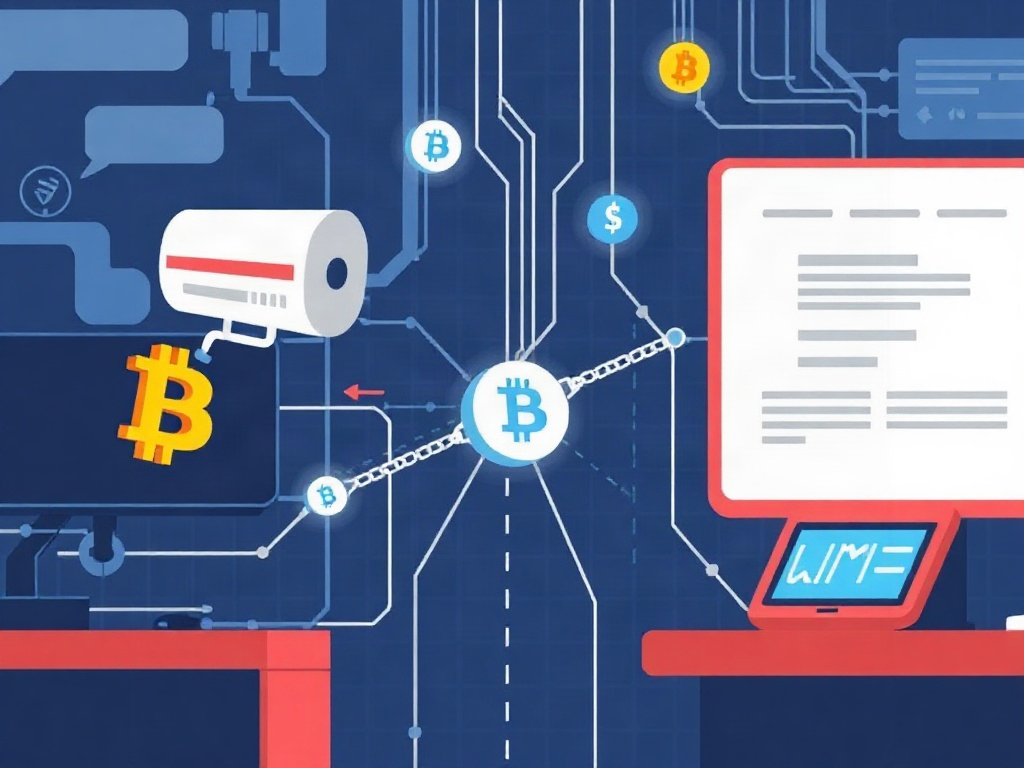
In the evolving landscape of blockchain analytics, chain surveillance evasion has become a critical consideration for users seeking financial privacy. As on-chain monitoring tools grow more sophisticated, understanding how transaction trails are constructed—and how they can be disrupted—is essential. This article explores the technical foundations of blockchain surveillance, the role of mixing services like btcmixer_en2 in preserving anonymity, and actionable methodologies for evading unwanted scrutiny while operating within legal and ethical boundaries.
The transparency that makes blockchain networks secure also makes them fully observable. Every transaction is permanently recorded, creating a permanent audit trail that forensic firms, regulatory bodies, and malicious actors can traverse. Chain surveillance evasion does not necessarily imply illicit activity; rather, it reflects a legitimate demand for privacy in a publicly accessible ledger. By examining the techniques used in chain analysis and the countermeasures available, users can make informed decisions about protecting their financial footprint.
The Anatomy of Blockchain Surveillance
Transaction Graph Analysis
At the core of modern surveillance is the construction of transaction graphs. These diagrams map the flow of funds across addresses, revealing patterns of interaction, consolidation, and distribution. Advanced clustering algorithms group addresses believed to belong to the same entity based on shared spending habits, timing correlations, and change output patterns. Understanding these mechanisms is the first step toward effective chain surveillance evasion.
Address Clustering Techniques
Heuristic clustering relies on the assumption that users often reuse addresses or consolidate funds from multiple sources into a single destination. Techniques such as common-input ownership, change address identification, and cross-input coefficient analysis allow analysts to label large swaths of the network. While these methods are probabilistic, their accuracy increases with data volume, making privacy-preserving strategies increasingly necessary.
Heuristic Monitoring by Exchanges and Governments
Many centralized exchanges employ internal surveillance systems to screen inflows and outflows against blacklists and risk scores. Governments similarly deploy analytics to enforce sanctions and tax compliance. These entities often flag transactions that exhibit characteristics associated with mixing services, structuring, or rapid movement across multiple jurisdictions. Recognizing these triggers helps users avoid inadvertent attention.
Mixing Services and Privacy Protocols
How btcmixer_en2 Operates Within the Ecosystem
btcmixer_en2 represents a newer generation of cryptocurrency mixing platforms designed to break the link between sender and recipient addresses. By pooling contributions from multiple users and redistributing funds through a series of internal transactions, the service obscures the original source of funds. The effectiveness of such services depends on pool size, transaction frequency, and the cryptographic integrity of the mixing process.
CoinJoin and Confidential Transactions
Technical alternatives to centralized mixers include CoinJoin implementations and Confidential Transactions (CT). CoinJoin combines multiple users' inputs into a single transaction with multiple outputs, making it computationally difficult to determine which input corresponds to which output. Confidential Transactions extend this by encrypting the transaction amount while preserving validity, thereby hiding both sender-receiver relationships and value information. Both approaches serve as foundational tools in the broader chain surveillance evasion toolkit.
Methodologies for Chain Surveillance Evasion
Temporal Obfuscation
One of the simplest yet often overlooked tactics is temporal obfuscation. By deliberately delaying transactions or spacing out interactions over extended periods, users can disrupt timing-based correlation attacks. Surveillance systems frequently rely on the assumption that funds moving quickly between addresses indicate a direct relationship; introducing deliberate pauses breaks this assumption and forces analysts to reconsider their hypotheses.
Multi-Hop Routing and Path Diversification
Multi-hop routing involves sending funds through a series of intermediate addresses or third-party services before reaching the final destination. Each hop severs a segment of the chain, and when combined with path diversification—using different routes for similar transactions—the overall surveillance footprint is significantly diluted. This methodology is particularly effective when paired with mixing services like btcmixer_en2, as the internal routing already introduces multiple intermediate steps.
Denomination Splitting and Value Shuffling
Surveillance tools often flag transactions involving round numbers or predictable value patterns. Denomination splitting involves breaking large sums into smaller, irregular amounts, while value shuffling ensures that output values do not directly correspond to input values. When executed across multiple transactions, these techniques create a noisy data environment that obscures the true flow of assets.
Evaluating Effectiveness and Trade-offs
No single technique provides absolute anonymity, and the most robust approaches combine multiple strategies. Users must weigh the benefits of enhanced privacy against potential drawbacks such as increased transaction fees, longer confirmation times, and the risk of interacting with unvetted mixing services. The goal of chain surveillance evasion is not to achieve invisibility, but to raise the cost and complexity of analysis to a level where surveillance becomes impractical.
- Pool size matters: Larger mixing pools provide stronger anonymity sets but may attract more attention from monitoring systems.
- Fee optimization: Higher fees can prioritize transactions, but consistent patterns in fee selection may become a fingerprint.
- Service reputation: Using well-established, audited mixing services reduces the risk of fund loss or exit scams.
Legal, Ethical, and Operational Considerations
While the pursuit of financial privacy is a legitimate concern, users must remain aware of the regulatory landscape surrounding mixing services. In many jurisdictions, the use of tumblers or mixers is subject to reporting requirements or outright prohibition. Engaging in chain surveillance evasion techniques that facilitate money laundering, tax evasion, or sanctions evasion carries significant legal risk. Ethical usage involves respecting the rules of the platforms being used and ensuring that privacy measures are not weaponized for harm.
Operationally, users should adopt a defense-in-depth mindset. This includes using hardware wallets, avoiding address reuse, employing Tor or VPNs when interacting with mixing services, and staying informed about updates to both blockchain analytics tools and privacy-enhancing technologies. A proactive approach minimizes unintended exposure and supports sustained privacy over time.
Conclusion: Building a Privacy-Conscious Strategy
The balance between transparency and privacy in blockchain ecosystems is an ongoing arms race. As surveillance capabilities advance, so too do the techniques available for chain surveillance evasion. By understanding the underlying mechanisms of chain analysis, leveraging mixing protocols such as btcmixer_en2, and applying methodological obfuscation strategies, users can maintain a meaningful degree of financial confidentiality. The key lies in informed, deliberate action—combining technical knowledge with operational security practices to navigate the public ledger on one's own terms.
Ultimately, privacy in decentralized systems is a shared responsibility. Developers, service providers, and users each play a role in shaping a landscape where transparency does not necessitate total exposure. Staying educated, remaining adaptable, and prioritizing security ensures that the benefits of blockchain technology can be enjoyed without compromising personal or financial privacy.
- Regularly update your knowledge of emerging surveillance techniques and countermeasures.
- Engage only with reputable mixing services and verify their security audits.
- Combine multiple obfuscation methods for layered privacy protection.
- Monitor regulatory developments that may impact the legality of mixing and evasion techniques.

Understanding chain surveillance evasion: Privacy Strategies for DeFi and Web3
As Robert Hayes, a DeFi & Web3 analyst tracking the evolution of protocol security and on-chain analytics, I've watched the tension between transparency and privacy play out across countless blockchain networks. The rise of sophisticated surveillance tools has fundamentally reshaped how capital moves through decentralized ecosystems, making "chain surveillance evasion" not just a technical curiosity, but an operational necessity for many participants.
What's often overlooked is that effective evasion isn't about obscurity or breaking protocol rules—it's about strategic design. From leveraging privacy-focused layer-2 solutions and mixers with proven audit trails to structuring multi-hop transactions that break correlation chains, the most resilient approaches combine cryptographic privacy with disciplined on-chain behavior. I always advise projects and power users to layer privacy at the protocol level where possible, while maintaining compliance gateways for regulated interactions, ensuring that privacy enhances rather than undermines the ecosystem's integrity.
Looking ahead, the arms race between surveillance infrastructure and privacy-preserving technologies will only intensify. For DeFi participants, staying ahead means understanding the trade-offs between total transparency and selective obfuscation, and building operations that are both robust and adaptable. The goal isn't to hide from scrutiny, but to engage with it on terms that preserve capital efficiency and user autonomy.