Effective Blacklist Address Screening Strategies for btcmixer_en2 Platforms
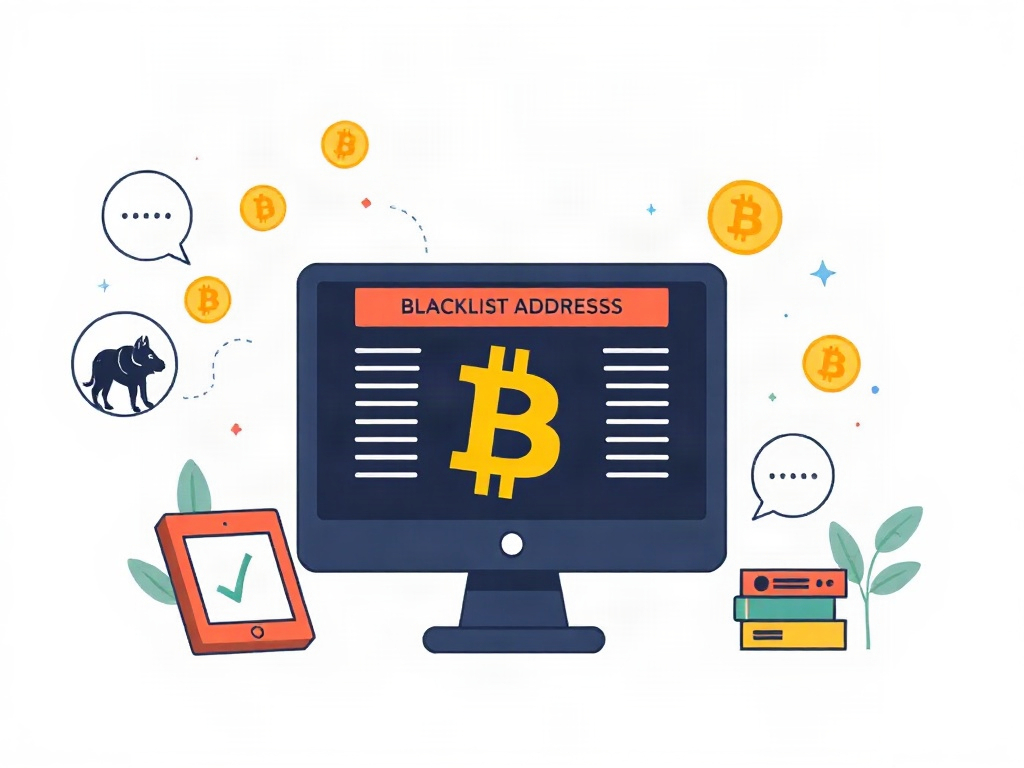
In the rapidly evolving landscape of digital asset privacy and compliance, blacklist address screening has become a cornerstone operation for platforms seeking to balance user anonymity with regulatory accountability. For operators and users of the btcmixer_en2 ecosystem, understanding how to implement robust address verification without compromising the core mission of transaction obfuscation is not just a technical necessity—it is a strategic imperative. This article dives deep into the mechanics, benefits, and best practices of blacklist address screening, offering a comprehensive guide tailored to the unique demands of the btcmixer_en2 niche.
The concept of maintaining a curated list of flagged or high-risk addresses dates back to the early days of cryptocurrency forensics. Initially, these lists were simple spreadsheets shared among compliance teams. Today, they are integrated into sophisticated analytics engines that can process thousands of addresses per second. The blacklist address screening process involves comparing every incoming and outgoing wallet address against a dynamically updated database of known illicit entities, mixing service identifiers, and sanctioned wallets. For btcmixer_en2 users, this means that every deposit or withdrawal trigger can be evaluated in real time, ensuring that the platform remains a safe harbor for legitimate privacy seekers while keeping bad actors at bay.
Foundational Principles of Blacklist Address Screening
What Is a Blacklist?
A blacklist, in the context of blockchain compliance, is a curated list of wallet addresses that have been flagged for suspicious activity, association with illicit markets, or inclusion on official sanctions lists maintained by governments and international bodies. Unlike whitelists, which permit only pre-approved participants, blacklists serve as exclusionary tools. The integrity of a blacklist depends on its freshness; stale data can lead to false negatives, allowing risky addresses to slip through, or false positives, inconveniencing legitimate users.
How Screening Works Technically
The technical workflow of blacklist address screening begins with address ingestion. When a user initiates a transaction on a btcmixer_en2 node, the destination and origin addresses are extracted and passed to a screening engine. This engine hashes the addresses and queries them against a remote or local database. The database contains metadata such as the source of the flag, the date of addition, and the risk level associated with the address. If a match is found, the system can trigger alerts, automatic freezes, or routing to enhanced due diligence procedures. The speed and accuracy of this process are paramount, as any lag can be exploited to move funds before a flag is raised.
Data Sources and Update Mechanisms
Effective screening relies on a multi-tiered data ingestion strategy. Primary sources include government sanctions lists (such as OFAC, EU, and UK lists), cybersecurity firm reports, and community-driven watchdogs. Secondary sources involve heuristic analysis, where addresses exhibiting patterns common to mixing services or tumblers are automatically flagged for review. Tertiary sources include real-time monitoring of known darknet marketplaces and ransomware payment streams. For btcmixer_en2 operators, maintaining a subscription-based feed that updates every few hours ensures that the blacklist remains relevant in a landscape where new addresses are generated by malicious actors every minute.
Integrating Screening into btcmixer_en2 Workflows
One of the greatest challenges for btcmixer_en2 platforms is integrating blacklist address screening without disrupting the user experience. Traditional compliance checks can add seconds or even minutes to a transaction flow, which conflicts with the speed expectations of privacy-focused users. The solution lies in modular integration. By deploying screening as a background service, the platform can evaluate addresses while the user interface continues to display transaction progress. If a flag is raised, a notification can be presented after the initial transaction confirmation, allowing the user to decide whether to proceed, adjust the destination, or cancel the operation.
Another critical aspect is the differentiation between inbound and outbound screening. Inbound screening focuses on the source of funds—determining whether the deposits being mixed have a clean provenance. This is vital for preventing the platform from becoming a conduit for laundering. Outbound screening, on the other hand, ensures that the mixed outputs are not being routed to known illicit addresses, which would expose both the platform and its users to legal risk. A balanced workflow might prioritize inbound checks during the deposit phase and outbound checks during the payout phase, creating a comprehensive security perimeter around the entire mixing cycle.
User education also plays a pivotal role. Many btcmixer_en2 users are technically savvy but may not fully understand why their favorite destination address was flagged. Providing transparent, non-technical explanations—such as "This address appears on a shared mixing service blacklist"—helps maintain trust. Additionally, offering a simple dispute mechanism allows users to submit addresses for re-evaluation, fostering a collaborative approach to security.
Technical Methodologies and Tools
Automated vs Manual Screening
Automation is the backbone of modern blacklist address screening. Modern engines utilize hash-based lookups, Bloom filters, and even probabilistic data structures to determine address membership in milliseconds. For a high-throughput btcmixer_en2 node, manual screening is simply not scalable. However, automation should not be absolute. A hybrid model, where automated systems flag addresses for human review, strikes the best balance between efficiency and accuracy. Human analysts can assess context—such as whether an address was flagged due to a false positive from a legitimate privacy tool—and make nuanced decisions that algorithms might miss.
Real-Time vs Batch Processing
The choice between real-time and batch processing depends on the platform's risk tolerance and infrastructure capacity. Real-time screening is essential for payouts, where delaying a user's funds to run a full compliance check could result in churn and reputational damage. Batch processing is more suitable for deposit analysis, where the platform can evaluate a batch of incoming addresses once per hour or per block, reducing computational overhead. Many btcmixer_en2 operators implement a tiered approach: real-time checks for outbound transactions, and batch analysis for inbound deposits, ensuring both speed and thoroughness.
- Hash-based lookups: Fast, deterministic, ideal for exact-match blacklist entries.
- Bloom filters: Probabilistic data structures that allow "maybe" responses, reducing database load while maintaining low false-positive rates.
- Geolocation correlation: Combining address blacklists with known jurisdictional risks to add an extra layer of due diligence.
- Machine learning models: Trained on historical transaction data to predict the likelihood of an address being risky, even if it hasn't been explicitly blacklisted yet.
Real-Time vs Batch Processing
Beyond the binary choice of real-time versus batch, advanced platforms are exploring streaming architectures. By using message queues such as Kafka or Redis Streams, btcmixer_en2 can process address screening as a continuous flow, applying rules engine logic to each address as it enters the system. This approach combines the low latency of real-time processing with the scalability of batch analytics, ensuring that no address slips through the cracks during peak traffic periods.
Regulatory Compliance and Risk Mitigation
Regulatory frameworks across the globe are tightening their grip on cryptocurrency mixing services. In many jurisdictions, failure to implement adequate blacklist address screening can result in severe penalties, including fines, license revocation, and even criminal charges for platform operators. The btcmixer_en2 niche, often viewed as a haven for privacy enthusiasts, must navigate these waters carefully. Compliance is not merely about checking boxes; it is about demonstrating a proactive commitment to preventing financial crime.
A robust compliance program begins with a written policy that outlines the platform's approach to blacklist address screening. This policy should specify which blacklist sources are used, how often updates are applied, and what actions are taken when a match is found. Documentation of these procedures is essential for audits and regulatory inspections. Furthermore, maintaining records of screened addresses, flagged events, and resolution outcomes creates an audit trail that can protect the platform in the event of a legal inquiry.
Risk mitigation extends beyond the technical screening mechanism. It encompasses Know Your Customer (KYB) for business partners, geographic restrictions for users in high-risk jurisdictions, and continuous monitoring of blacklist changes. For btcmixer_en2 operators, collaborating with compliance-as-a-service providers can offload the burden of maintaining up-to-date blacklists and interpreting complex regulatory requirements. These partnerships allow the core team to focus on platform innovation while ensuring that compliance standards are consistently met.
Another critical element is the establishment of a clear escalation path for false positives. When a legitimate user's address is incorrectly flagged, the platform must have a rapid remediation process. This includes a user-friendly appeal form, a dedicated compliance review team, and a timeline for resolution (e.g., 48 hours). By handling false positives efficiently, btcmixer_en2 platforms can maintain user trust without compromising their security posture.
Best Practices and Future Outlook
To excel in blacklist address screening, btcmixer_en2 platforms should adopt a set of industry best practices. First, always use multiple independent blacklist sources. Relying on a single database creates blind spots; cross-referencing increases coverage and reduces the risk of both false positives and false negatives. Second, implement a tiered risk scoring system. Instead of a binary pass/fail, assign a risk score (e.g., low, medium, high) based on the number of matches, the recency of the data, and the nature of the associated entity. This allows for graduated responses, such as enhanced verification for medium-risk addresses and automatic rejection for high-risk ones.
Third, prioritize privacy-preserving screening techniques. Zero-knowledge proofs and secure multi-party computation are emerging technologies that could allow address screening without revealing the actual address to the screening service. While still in early adoption, these methods align perfectly with the ethos of btcmixer_en2 and could become the next standard for compliant privacy mixing.
Fourth, invest in community intelligence. The cryptocurrency community often identifies new mixing service addresses and illicit wallets before official blacklists do. Establishing a bug bounty or reward program for users who report suspicious addresses can supplement official data feeds and keep the platform

blacklist address screening: Enhancing Trust and Compliance in Crypto Markets
As a senior crypto market analyst with over a decade of experience tracking digital asset trends, I have witnessed the evolution of regulatory frameworks and the growing necessity of robust risk management tools. blacklist address screening has emerged as a foundational practice for institutions and sophisticated investors seeking to navigate the complex intersection of innovation and compliance. In an ecosystem where transparency is often balanced against pseudonymity, the ability to vet counterparties against curated blacklists not only mitigates legal exposure but also fortifies the integrity of portfolio allocations.
Practically, effective blacklist address screening goes beyond simple blocklist matching. It requires contextual intelligence, real-time data integration, and an understanding of how illicit flows adapt to shifting enforcement tactics. From my vantage point, the most successful implementations combine automated on-chain analytics with human oversight, ensuring that flagged addresses are assessed for actual risk rather than merely excluded on principle. This hybrid approach allows firms to maintain operational efficiency while adhering to evolving global standards such as FATF recommendations and jurisdictional AML mandates.
Looking ahead, I believe blacklist address screening will transition from a reactive compliance checkbox to a proactive strategic asset. As decentralized finance expands and cross-chain interoperability deepens, the granularity and accuracy of screening mechanisms will directly influence institutional adoption rates and market stability. For practitioners like myself, staying ahead of these technical and regulatory shifts is not optional—it is essential for safeguarding client interests and sustaining long-term growth in the digital asset space.