Bitcoin Mixer vs Privacy Coin: Choosing the Right Path for Cryptocurrency Privacy
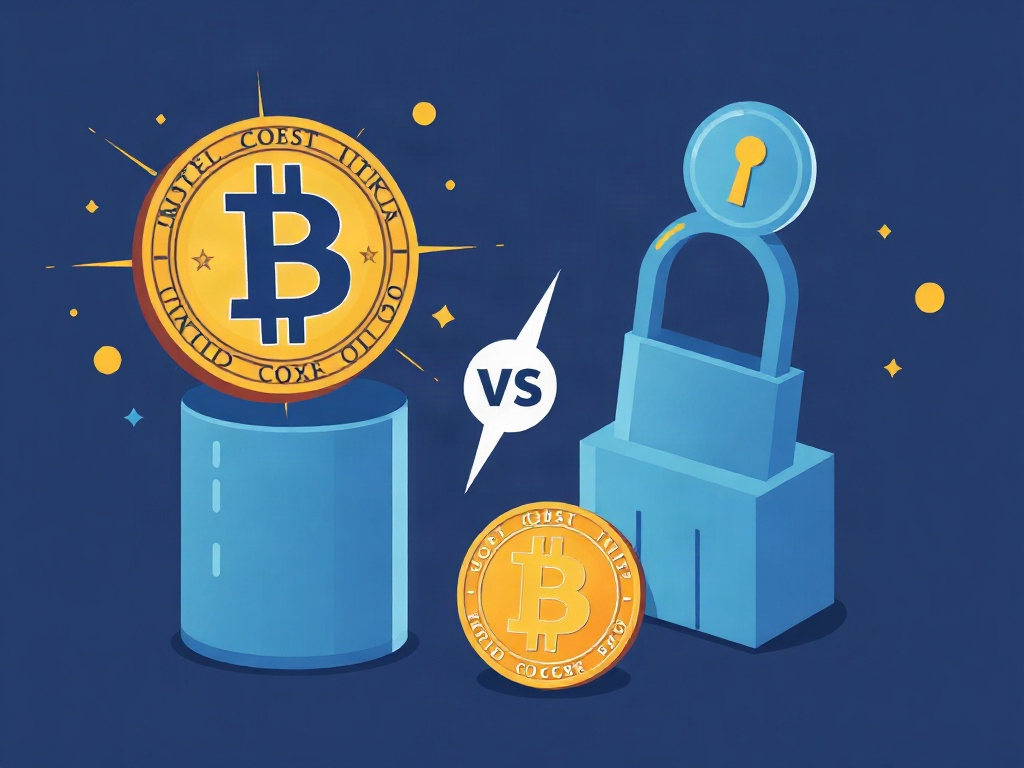
In the evolving landscape of digital finance, privacy has become a cornerstone concern for both casual users and institutional participants. Among the most discussed tools for achieving anonymity are bitcoin mixers and privacy coins. While both aim to obscure transaction trails, they operate on fundamentally different principles. This article dives deep into the mechanics, advantages, trade-offs, and regulatory considerations of each approach, providing a clear bitcoin mixer vs privacy coin comparison to help you make informed decisions.
Understanding how these technologies function is essential for anyone seeking to protect their financial sovereignty without falling afoul of compliance requirements. Below, we break down the technical underpinnings, real-world use cases, and the shifting legal terrain that surrounds these privacy-enhancing solutions.
The Mechanics of Bitcoin Mixers
What Is a Bitcoin Mixer?
A bitcoin mixer, also known as a tumbler, is a service that pools together multiple users' transactions and redistributes the funds in a way that breaks the on-chain link between sender and recipient. By doing so, it makes it significantly harder for blockchain analysis firms, surveillance tools, or malicious actors to trace the origin or destination of specific coins. The core value proposition of a mixer is its ability to provide immediate privacy retroactively, meaning users can send already-mined bitcoins through a service to obfuscate their history.
Centralized vs Decentralized Mixers
Mixers generally fall into two categories: centralized and decentralized. Centralized mixers operate as businesses that accept coins from multiple users, shuffle them internally, and send them to designated recipients. They often charge a fee and may require KYC (Know Your Customer) procedures, which can undermine the very privacy they promise. Decentralized mixers, on the other hand, leverage protocols like CoinJoin, where multiple participants voluntarily combine their transactions into a single indistinguishable output. These systems are trustless and often open-source, but they may require technical know-how to operate effectively.
How Mixers Enhance Anonymity
The anonymity set—the group of transactions that are indistinguishable from one another—is the metric by which mixer effectiveness is measured. A larger anonymity set generally means stronger privacy. Advanced mixers employ techniques such as time-delay features, multiple output addresses, and integration with Tor or VPNs to further complicate forensic analysis. However, the level of privacy achieved depends heavily on the mixer's operational security, user behavior, and the sophistication of chain analysis tools.
The World of Privacy Coins
Defining Privacy Coins
Privacy coins are cryptocurrencies designed from the ground up with confidentiality as a core feature. Unlike transparent blockchains like Bitcoin, where every transaction is publicly visible and permanently recorded, privacy coins employ advanced cryptographic techniques to mask sender, receiver, and transaction amount. Well-known examples include Monero (XMR), Zcash (ZEC), and Dash (DASH). These coins aim to provide default privacy, meaning that all transactions are private by default, without the need for external services.
Monero and Ring Signatures
Monero pioneered the use of ring signatures, a technique that mixes a user's transaction with several others, making it computationally infeasible to determine which input actually spent the funds. Additionally, Monero uses stealth addresses, which generate one-time addresses for each transaction, ensuring that the recipient's address remains hidden on the blockchain. Ring Confidential Transactions (RingCT) further obscure the amount being transferred, providing a comprehensive privacy shield.
Zcash and zk-SNARKs
Zcash takes a different approach by utilizing zk-SNARKs (Zero-Knowledge Succinct Non-Interactive Arguments of Knowledge). This cryptographic proof allows one party to prove to another that a statement is true—such as "I have sufficient funds to make this transaction"—without revealing any underlying data. Zcash users can choose between transparent addresses, which function like traditional Bitcoin addresses, and shielded addresses, which enable fully private transactions. The optional nature of privacy in Zcash means users can comply with regulatory requirements when needed while still enjoying optional confidentiality.
Fungibility and Network Effects
One of the most significant advantages of privacy coins is fungibility. In a transparent system, coins can become "tainted" if they have been associated with illicit activities, potentially leading to rejection by exchanges or services. Privacy coins aim to make every coin indistinguishable from another, ensuring that no coin carries a historical baggage. This intrinsic fungibility is a powerful feature for users who prioritize financial freedom and resistance to censorship.
Bitcoin Mixer vs Privacy Coin: Direct Comparison
- Implementation Timing: Mixers are retroactive tools applied to already-mined coins, whereas privacy coins offer privacy from the moment of transaction creation.
- Trust Model: Centralized mixers require users to trust a third party with their funds, while decentralized mixers and privacy coins are trustless by design, relying on cryptography rather than intermediaries.
- Regulatory Exposure: Mixers, especially centralized ones, have faced significant scrutiny from law enforcement and regulators, often being labeled as money laundering tools. Privacy coins also face regulatory pressure, but their protocol-level design makes them harder to shut down without affecting the broader blockchain ecosystem.
- User Experience: Using a mixer typically involves sending coins to a service address and waiting for redistribution, which can be straightforward but carries custodial risk. Privacy coins require holding a specific asset and using compatible wallets, which may have steeper learning curves but offer seamless privacy.
- Anonymity Set Size: The effectiveness of a mixer's anonymity set depends on user participation and can vary day to day. Privacy coins maintain a consistent anonymity set determined by the protocol's cryptographic parameters and network adoption.
Each approach has distinct trade-offs, and the choice often depends on whether a user values immediate, service-based privacy (mixer) or protocol-native, always-on privacy (privacy coin).
Use Cases and User Profiles
- Privacy-Conscious Individuals: Everyday users who wish to keep their financial activity private from ISPs, data brokers, or curious acquaintances may find mixers sufficient for occasional needs, while privacy coins offer a more permanent solution.
- Crypto Traders and Investors: Active participants in decentralized finance (DeFi) or frequent traders may prefer privacy coins for their seamless integration with exchanges and wallets that support them, avoiding the friction of routing funds through external mixing services.
- Businesses and Institutional Players: Companies dealing with sensitive payments or seeking to protect commercial confidentiality might opt for privacy coins that allow selective transparency, such as Zcash's shielded/transparent address mix, to satisfy both privacy and audit requirements.
- Activists and Whistleblowers: In high-risk environments, the robust cryptography of privacy coins like Monero provides a level of security that is difficult to achieve with mixers, which may be vulnerable to seizure or shutdown of the hosting service.
- Regulatory Compliance Officers: Professionals tasked with ensuring AML (Anti-Money Laundering) compliance may find it easier to work with entities that have transparent transaction histories, making mixers riskier, while privacy coins' optional privacy features (in the case of Zcash) can offer a middle ground.
Understanding your specific risk tolerance, use case, and technical comfort level is crucial when deciding between these privacy tools.
Legal and Regulatory Landscape
Regulatory Scrutiny of Mixers
Governments and regulatory bodies worldwide have increasingly targeted bitcoin mixers. The primary concern is their potential use in money laundering, tax evasion, and financing of illicit activities. Several jurisdictions have enacted or proposed legislation requiring mixers to implement KYC/AML procedures, effectively eroding their privacy-preserving purpose. In some cases, mixers have been sanctioned or shut down entirely, and users accessing such services may face legal consequences.
Privacy Coins Under the Microscope
Privacy coins have not escaped regulatory attention either. Exchanges in various regions have delisted or suspended trading of coins like Monero and Zcash to comply with local laws. Financial action task forces (FATF) guidelines recommend that virtual asset service providers (VASPs) assess and mitigate risks associated with privacy-enhanced cryptocurrencies. However, the decentralized nature of these coins means that outright bans are technically challenging to enforce, and many users continue to acquire and hold them through peer-to-peer platforms or non-compliant exchanges.
Balancing Privacy and Compliance
The tension between privacy and regulatory compliance is unlikely to disappear. Innovations such as privacy-preserving KYC, zero-knowledge proofs for identity verification, and layered regulatory frameworks aim to reconcile these opposing goals. For users, staying informed about the legal status in their jurisdiction and adopting best practices—such as using hardware wallets, avoiding address reuse, and diversifying privacy tools—is essential for mitigating risk.
Future Outlook
As blockchain analytics become more sophisticated, both mixers and privacy coins will face ongoing pressure to evolve. We may see the rise of more decentralized mixer protocols with built-in governance, as well as privacy coins adopting more advanced cryptography to stay ahead of analysis tools. Ultimately, the market will determine the balance between usability, privacy, and compliance, shaping the next generation of crypto confidentiality solutions.
Conclusion: Making an Informed Choice
The debate between bitcoin mixer vs privacy coin is not about which is universally better, but rather which aligns best with your privacy goals, risk tolerance, and operational needs. Mixers offer a flexible, service-based approach that can be applied to existing bitcoins but come with custodial and regulatory risks. Privacy coins provide protocol-level, always-on privacy and intrinsic fungibility, though they require holding a specific asset and may face broader acceptance challenges.
For those new to crypto privacy, starting with a reputable,

Bitcoin Mixer vs Privacy Coin: Analyzing the Landscape of On-Chain Anonymity
As James Richardson, Senior Crypto Market Analyst with over a decade of experience tracking digital asset trends, I view the debate between bitcoin mixers and privacy coins as a fundamental clash between ad hoc obfuscation and protocol-level design. Mixers, often described as tumblers, function as external services that pool and redistribute funds to break on-chain linkage, whereas privacy coins like Monero or Zcash embed anonymity mechanisms directly into their consensus layer. From a market perspective, the choice between these approaches often hinges on the user's technical sophistication, risk tolerance, and the evolving regulatory environment that increasingly targets privacy-enhancing tools.
Practically, mixers offer flexibility—they can be used with any UTXO-based blockchain, including Bitcoin—but they come with significant reputational and legal exposure. High-profile enforcement actions have demonstrated that mixers can be classified as money transmitters or even sanctions targets, making them risky for institutional participants. Privacy coins, by contrast, provide a more consistent user experience and, when implemented with strong cryptography like ring signatures or zk-SNARKs, offer mathematically verifiable privacy. However, they face their own hurdles, including delisting from major exchanges and scrutiny from compliance frameworks that prioritize transaction transparency.
For investors and analysts, the distinction is not merely technical but also strategic. Mixers represent a reactive layer, often appealing to users seeking short-term anonymity, while privacy coins are proactive assets designed for privacy-first ecosystems. As the industry matures, I expect convergence in privacy technologies—such as Bitcoin's Taproot upgrades and layer-2 solutions—to reshape this landscape, but the core tension between centralized mixing services and decentralized protocol privacy will likely persist, driving both innovation and regulatory friction.