Anonymous Cross-Chain Swap: The Future of Private Cryptocurrency Trading
In the rapidly evolving world of cryptocurrency, privacy and interoperability have become two of the most pressing concerns for traders and investors. Traditional exchanges often require users to disclose personal information, while cross-chain transactions can be slow, expensive, and traceable. This is where anonymous cross-chain swaps come into play. By combining the benefits of decentralized finance (DeFi) with advanced cryptographic techniques, these swaps offer a secure, private, and efficient way to exchange assets across different blockchain networks without compromising user anonymity.
This comprehensive guide explores the concept of anonymous cross-chain swaps, their underlying technologies, key benefits, and how they compare to traditional trading methods. Whether you're a seasoned crypto trader or a privacy-conscious investor, understanding this innovative solution can help you navigate the complexities of modern digital asset exchanges while maintaining financial sovereignty.
What Is an Anonymous Cross-Chain Swap?
Defining the Concept
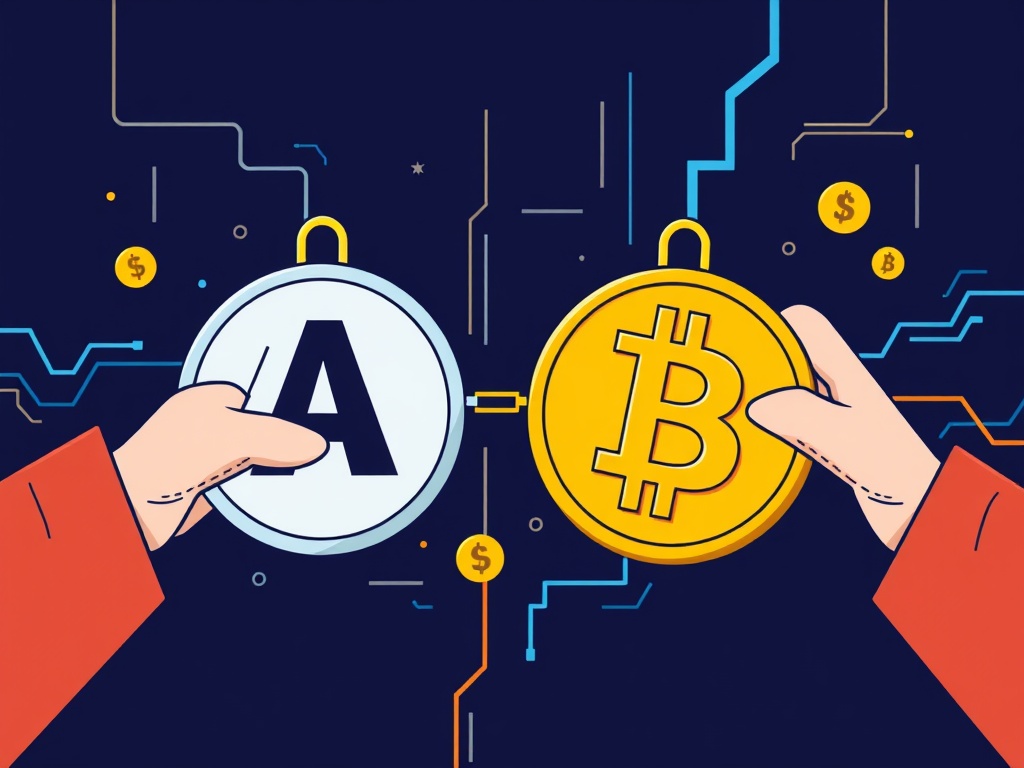
An anonymous cross-chain swap is a decentralized cryptocurrency exchange mechanism that allows users to trade assets between different blockchain networks without revealing their identities or transaction details. Unlike centralized exchanges (CEXs) that require KYC (Know Your Customer) verification, or decentralized exchanges (DEXs) that may expose transaction histories on public ledgers, anonymous cross-chain swaps leverage privacy-preserving technologies such as zero-knowledge proofs (ZKPs), atomic swaps, and privacy coins to ensure complete confidentiality.
These swaps are particularly valuable in a landscape where blockchain transparency, while beneficial for auditability, often conflicts with user privacy. By enabling seamless asset transfers across chains—such as Bitcoin to Ethereum, Monero to Litecoin, or any combination thereof—anonymous cross-chain swaps empower users to maintain financial privacy without sacrificing accessibility or speed.
How It Differs from Traditional Swaps
Traditional cross-chain swaps, such as those facilitated by centralized platforms or atomic swap protocols, typically involve public transaction records. While atomic swaps allow peer-to-peer (P2P) exchanges without intermediaries, they often occur on-chain and are visible to anyone analyzing the blockchain. This transparency can expose users to risks such as transaction tracing, wallet linking, and potential deanonymization attacks.
In contrast, anonymous cross-chain swaps integrate privacy-enhancing mechanisms to obscure both the sender and receiver addresses, the amount transacted, and even the asset types involved. This is achieved through a combination of:
- Stealth addresses – One-time-use addresses that prevent address reuse and linkability.
- Ring signatures – Cryptographic signatures that mix a user's transaction with others, making it impossible to determine the true sender.
- Zero-knowledge proofs – Mathematical proofs that verify transaction validity without revealing underlying data.
- Privacy-focused blockchains – Networks like Monero, Zcash, or Dash that natively support confidential transactions.
These features collectively ensure that an anonymous cross-chain swap remains untraceable, unlinkable, and resistant to surveillance—making it a cornerstone of privacy-first DeFi.
Use Cases and Real-World Applications
The applications of anonymous cross-chain swaps extend far beyond simple asset trading. They are increasingly used in:
- Privacy-preserving DeFi: Enabling users to lend, borrow, or provide liquidity on decentralized platforms without exposing their portfolio composition.
- Censorship-resistant trading: Allowing individuals in restrictive jurisdictions to access global financial markets without fear of account freezing or asset seizure.
- Darknet market interactions: Facilitating secure, private transactions for users who prioritize anonymity in high-risk environments (though this use case is ethically and legally contentious).
- Cross-border remittances: Enabling fast, low-cost, and private transfers between different cryptocurrencies used in different regions.
- Token migration and upgrades: Supporting seamless transitions between legacy and new blockchain versions without exposing user holdings.
As regulatory scrutiny increases and blockchain surveillance tools become more sophisticated, the demand for anonymous cross-chain swaps is expected to grow, positioning them as a critical infrastructure layer for the next generation of digital finance.
The Technology Behind Anonymous Cross-Chain Swaps
Core Protocols and Architectures
Implementing an anonymous cross-chain swap requires a sophisticated technological stack that bridges privacy and interoperability. Several protocols have emerged to fulfill this role, each with unique approaches to achieving secure, private, and cross-chain transactions.
Atomic Swaps with Privacy Enhancements
Atomic swaps are a foundational technology for cross-chain exchanges. They use hash time-locked contracts (HTLCs) to ensure that either both parties receive their assets or neither does, eliminating counterparty risk. However, standard atomic swaps are not private. To integrate privacy, developers have introduced:
- Confidential transactions (CT) – Used in Monero, CT hides transaction amounts using Pedersen commitments.
- Stealth addresses – Generated on-the-fly to receive funds without linking to a user's public identity.
- Adaptor signatures – Enable conditional payments where the release of one asset depends on the secret revelation of another, all while preserving privacy.
Projects like Bisq and SwapKit have experimented with integrating privacy features into atomic swap protocols, though full anonymity remains a challenge due to on-chain visibility.
Zero-Knowledge Proofs and zk-SNARKs
Zero-knowledge proofs (ZKPs) are at the heart of many privacy solutions in blockchain. A zk-SNARK (Zero-Knowledge Succinct Non-Interactive Argument of Knowledge) allows a user to prove that they know a secret value without revealing it. In the context of an anonymous cross-chain swap, zk-SNARKs can be used to:
- Verify that a user has sufficient balance to complete a swap without revealing the exact amount.
- Confirm that a transaction adheres to protocol rules without exposing sender or receiver identities.
- Enable cross-chain validation where a proof generated on one chain is verified on another.
Projects like Zcash and Mina Protocol have pioneered ZKP applications, and newer platforms like Aleph Zero and Polygon zkEVM are exploring cross-chain ZK rollups that could support anonymous cross-chain swaps at scale.
Privacy-Preserving Bridges
Blockchain bridges are essential for cross-chain interoperability, but most are not privacy-friendly. To address this, several projects are developing privacy-preserving bridges that use:
- Trusted execution environments (TEEs) – Secure enclaves like Intel SGX that process transactions off-chain and only publish encrypted or hashed results.
- Decentralized mixers – Protocols like Tornado Cash (now sanctioned) that mix tokens across chains to break transaction trails.
- Cross-chain privacy relays – Nodes that relay transactions between chains while applying privacy techniques like coin mixing or address shuffling.
Examples include THORChain with its native privacy features and Secret Network, which uses CosmWasm smart contracts with built-in privacy via zk-SNARKs and TEEs.
Key Technologies in Detail
Stealth Addresses
A stealth address is a one-time-use cryptographic address generated for each transaction. When Alice wants to receive funds from Bob in an anonymous cross-chain swap, she generates a stealth address derived from her public key and a random nonce. Bob sends funds to this address, and only Alice can detect the payment using her private key. This prevents blockchain analysts from linking transactions to Alice's wallet.
Stealth addresses are widely used in privacy coins like Monero and are now being integrated into cross-chain protocols through libraries such as OpenAlias and Monero's Kovri.
Ring Signatures
Ring signatures allow a user to sign a transaction on behalf of a group (or "ring") of possible signers, without revealing which member actually signed it. This obfuscates the true sender of a transaction. In Monero, ring signatures are combined with stealth addresses and confidential transactions to form the CryptoNote protocol.
For anonymous cross-chain swaps, ring signatures can be used in off-chain signing protocols or within privacy-preserving smart contracts to authorize swaps without exposing identities.
CoinJoin and Mixers
CoinJoin is a privacy technique where multiple users combine their transactions into a single batch, making it difficult to trace individual inputs and outputs. While traditional mixers like Wasabi Wallet operate within a single blockchain, newer solutions like JoinMarket and Sparkmixer are exploring cross-chain mixing.
For example, a user could send Bitcoin to a mixer, which then sends Monero to a stealth address—effectively breaking the on-chain trail. This hybrid approach is a practical implementation of anonymous cross-chain swaps in real-world wallets.
Emerging Innovations: zk-Rollups and Cross-Chain Privacy
Recent advancements in zero-knowledge rollups are paving the way for scalable, private cross-chain transactions. A zk-rollup bundles hundreds of transactions into a single proof, which is then verified on a base layer (e.g., Ethereum). When combined with cross-chain bridges, these rollups can support anonymous cross-chain swaps with near-instant finality and minimal fees.
Projects like zkSync Era, StarkNet, and Polygon zkEVM are exploring privacy-preserving rollups that could enable:
- Private asset transfers between Ethereum and other chains.
- Confidential DeFi operations (e.g., private lending or yield farming).
- Atomic swaps executed within a zk-rollup environment.
These innovations represent a major leap toward making anonymous cross-chain swaps both private and scalable.
Benefits of Using Anonymous Cross-Chain Swaps
Enhanced Financial Privacy
The most immediate benefit of an anonymous cross-chain swap is the preservation of financial privacy. In an era where blockchain analysis firms like Chainalysis and TRM Labs can trace transactions across multiple chains, maintaining anonymity is no longer optional—it's a necessity for many users.
By using anonymous cross-chain swaps, individuals can:
- Prevent wallet fingerprinting and address clustering.
- Avoid exposure of transaction history to employers, family, or malicious actors.
- Protect sensitive financial data from being exploited in phishing attacks or doxxing.
- Maintain compliance with personal privacy laws (e.g., GDPR) by minimizing data exposure.
This level of privacy is especially crucial for high-net-worth individuals, journalists, activists, and businesses operating in competitive markets.
Censorship Resistance and Accessibility
Centralized exchanges are increasingly subject to regulatory pressure, leading to account freezes, transaction delays, and geographic restrictions. In contrast, anonymous cross-chain swaps operate in a decentralized manner, often without any central authority to enforce censorship.
This makes them ideal for users in:
- Countries with strict capital controls (e.g., China, Russia, Venezuela).
- Regions with oppressive financial surveillance (e.g., parts of the Middle East or Africa).
- Situations where traditional banking infrastructure is unavailable or unreliable.
By enabling peer-to-peer exchanges without intermediaries, anonymous cross-chain swaps democratize access to global financial markets, regardless of location or political context.
Reduced Counterparty and Exchange Risks
Traditional exchanges are vulnerable to hacks, insolvency, and exit scams. Even decentralized exchanges can expose users to smart contract risks or impermanent loss. With an anonymous cross-chain swap, users retain full control of their assets throughout the transaction process.
Key risk reductions include:
- No custody risk: Users never deposit funds into a third-party platform.
- Atomic execution: Swaps either complete fully or revert entirely, eliminating partial failures.
- No single point of failure: The absence of a central server or admin reduces attack surfaces.
- Immutable audit trails: While privacy is preserved, the swap process is cryptographically verifiable.
This makes anonymous cross-chain swaps significantly safer than custodial or semi-custodial trading solutions.
Cost Efficiency and Speed
While privacy often comes at a computational cost, modern anonymous cross-chain swaps are becoming increasingly efficient. By leveraging layer-2 solutions, rollups, and off-chain computation, these swaps can offer:
- Lower fees compared to on-chain atomic swaps or centralized exchanges.
- Faster settlement times, especially when using off-chain protocols or privacy-preserving bridges.
- Batch processing capabilities that reduce per-transaction costs.
For example, a swap between Bitcoin and Ethereum using a privacy-focused bridge might cost a fraction of a dollar and settle in minutes, compared to hours or days on a traditional exchange.
Interoperability Without Compromise
One of the biggest challenges in crypto is the fragmentation of blockchain ecosystems. Users often need to move assets between chains to access better yields, lower fees, or specific dApps. Anonymous cross-chain swaps solve this by enabling seamless, private transfers across networks without requiring users to sacrifice privacy for functionality.
This interoperability extends to:
- Layer-1 blockchains (Bitcoin, Ethereum, Solana, etc.).
- Layer-2 solutions (Arbitrum, Optimism, zkSync).
- Privacy coins (Monero, Zcash, Dash).
- Enterprise and institutional chains (Hyperledger, Corda).
As blockchain ecosystems mature, the ability to perform an anonymous cross-chain swap will become as common as sending an email—ubiquitous, fast, and secure.
Challenges and Limitations of Anonymous Cross-Chain Swaps
Technical Complexity and User Experience
Despite their advantages, anonymous cross-chain swaps are not yet as user-friendly as centralized exchanges. The integration of privacy technologies like ZKPs, stealth addresses, and ring signatures adds complexity to both the backend infrastructure and the frontend interface.
Common challenges include:
- Wallet compatibility: Not all wallets support stealth addresses or privacy coins.
- Transaction fees: Privacy-enhancing features often increase computational overhead, leading to higher fees.
- Recovery mechanisms: Losing a private key or seed phrase in a privacy-focused system can result in permanent fund loss, as there’s no customer support to recover assets.
- User onboarding: New users may struggle with concepts like view keys, spend keys, or zk-proof generation.
Improving the user experience (UX) of anonymous cross-chain swaps will require better wallet integrations, simplified interfaces, and educational resources to bridge the knowledge gap.
Regulatory and Compliance Risks
While privacy is a core feature of anonymous cross-chain swaps, it also attracts regulatory scrutiny. Governments and financial authorities view untraceable transactions as potential enablers of money laundering, terrorist financing, and tax evasion. As a result:
- Some jurisdictions have banned or restricted privacy coins (e.g., South Korea, Japan).
- Exchanges and bridges may face enhanced due diligence (EDD) requirements when interacting with privacy-focused protocols.
- Developers and users of anonymous cross-chain
 Emily ParkerCrypto Investment Advisor
Anonymous Cross-Chain Swap: The Future of Secure and Private Digital Asset Exchange
As a certified financial analyst with over a decade of experience in cryptocurrency investment strategies, I’ve seen firsthand how the demand for privacy and security in digital asset transactions has evolved. The emergence of anonymous cross-chain swap technology represents a significant leap forward in addressing these concerns. Unlike traditional exchanges that often require KYC (Know Your Customer) verification and leave transaction histories exposed, anonymous cross-chain swaps enable users to exchange assets across different blockchains without revealing their identities or transaction details. This innovation is particularly compelling for institutional investors and privacy-conscious individuals who prioritize confidentiality without sacrificing efficiency.
From a practical investment perspective, anonymous cross-chain swaps offer several advantages that could reshape the digital asset landscape. First, they reduce counterparty risk by eliminating the need for centralized intermediaries, which are often vulnerable to hacks or regulatory scrutiny. Second, they enhance liquidity by connecting disparate blockchain ecosystems, allowing assets to flow seamlessly between networks like Ethereum, Bitcoin, and emerging Layer 2 solutions. For investors, this means faster, cheaper, and more secure transactions—critical factors in a market where speed and privacy can directly impact returns. However, it’s essential to approach this technology with caution, as regulatory uncertainty and the potential for misuse (e.g., money laundering) remain valid concerns. Investors should conduct thorough due diligence and consider platforms with robust compliance frameworks to mitigate these risks.